George Macartney Quotes
The breaking-up of the power of China would occasion a complete subversion of the commerce, not only of Asia, but a very sensible change in the other quarters of the world. The industry and the ingenuity of the Chinese would be checked and enfeebled, but they would not be annihilated. Her ports would no longer be barricaded; they would be attempted by all the adventures of all trading nations, who would search every channel, creek, and cranny of China for a market, and for some time be the cause of much rivalry and disorder. Nevertheless, as Great Britain, from the weight of her riches and the genius and spirits of her people, is become the first political, marine, and commercial Power on the globe, it is reasonable to think that she would prove the greatest gainer by such a revolution as I have alluded to, and rise superior over every competitor.
The Chinese Emperor Qianlong would not allow entry to Chinese ports by Western (Christian) traders {641621}. The nation was already somewhat unstable {641623}, and it might not take much to topple it.
George Macartney, 1737–1806, British Statesman, First British Ambassador to China, Helen Henrietta Macartney Robbins, Our First Ambassador to China: An Account of the Life of George, Earl of Macartney with Extracts from His Letters, and the Narrative of His Experiences in China, as Told by Himself, 1737–1806, from Hitherto Unpublished Correspondence and Documents, 1908
Sourced by: Eigen's Political and Historical Quotations


China had learned to grow new crops from the Americas and their greater ability to produce food led to large population growth which was straining the other national resources and the economy, technology and government could not handle the growth, producing much unhappiness and discontent.


Burke was one of the few in England who predicted economic and commercial success of America.

He had introduced a bill to provision a military garrison at the mouth of the Columbia River on the West Coast and protect and develop trade with China and India. President Monroe was for it and he persuaded the House to vote for it, but the bill to encourage foreign free trade with the Orient died in the Senate. Floyd was another American ahead of his time. . Floyd was very modern in his economic views, so much so that he, even as a Southern politician, opposed slavery on the grounds that it was economically inefficient and the South would never develop industrially if it had no incentive, as existed in the North and England, to reduce the amount of labor required for economic opportunity. He was right on that point as well.

Most Americans were just beginning to comprehend the importance of international relations to American agriculture and our food supply.


Many free-traders disagree. While there is unemployment in the auto industry from imported cars, there is increased employment in the importing process, the marketing, selling, and maintenance of the imported cars as well as their financing. Further, when trade is open, we can then export products and services to Japan and this creates jobs. No one has ever been able to exactly measure the jobs created so it is an unsettled intellectual economic and political question. However, the people who lose jobs to imports are generally identifiable while the beneficiaries of many of the new jobs created by open trade are never specifically identified, so public opinion is more sympathetic to the former.


5th Earl of Rosebery. With free trade, there are winners and losers. The advocates observe that overall, there is a great benefit to most countries engaging in free trade, but some sectors of the economy, and some areas and groups of people fare poorly.

Hong Kong was not always a successful city or colony. In 1844 the British were thinking of swapping it for a better colony. However, in a rare combination of synergistic development of a colony, the great strengths of the Chinese and that of the English combined to make Hong Kong one of the best and well developed cities in the world. Few imperial colonies turned out as well.


There was still a large isolationist wing in Congress that was discovering that the economics of the world affected America as well.

1st Viscount Grey of Fallodon


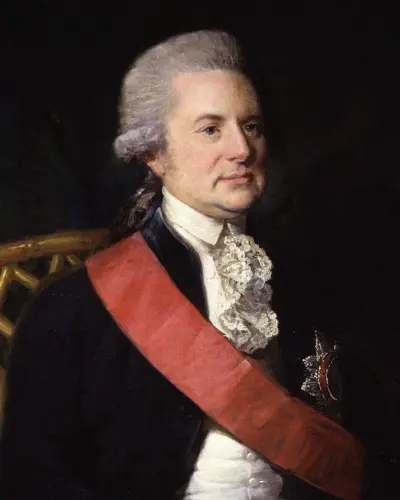
- Born: May 14, 1737
- Died: May 31, 1806
- Nationality:
- Profession:
George Macartney, 1st Earl Macartney KB was a British statesman, colonial administrator and diplomat. He is often remembered for his observation following Britain's success in the Seven Years War and subsequent territorial expansion at the Treaty of Paris that Britain now controlled "a vast Empire, on which the sun never sets".
