Grover Cleveland Quotes
The best results in the operation of a government wherein every citizen has a share largely depend upon a proper limitation of purely partisan zeal and effort and a correct appreciation of the time when the heat of the partisan should be merged in the patriotism of the citizen.
Grover Cleveland, 1837-1908, 22nd & 24th President of the United States (Democrat, NY), Inaugural Address, March 4, 1885
Sourced by: Eigen's Political and Historical Quotations


In one of the most unusual revolutions in world history, Brazil became independent from Portugal via a revolution led by the son of the Portuguese King and heir to the throne, Pedro I. The crown prince of Portugal, led Brazil in her breakaway from Portugal and by popular acclaim became Pedro I, Emperor of Brazil. He is probably the only monarch in history who was the heredity monarch of one kingdom and selected by popular acclaim to the throne of another.


The only soldier ever so honored. He was then the Chief of Staff of the Army.


This is another example of a common practice amongst dictators and extremists of the Right and the Left. First they define “Patriotic” as accepting and following their norms, politics, regulations or laws. Then they define out any dissidents as not bona fide citizens of the nation. In the next step, the lack of citizenship and patriotism allows imprisonment, torture and even death at times. It is one thing to accuse dissidents as being citizens in opposition to the existing government; it is quite another to define them as no longer a citizen who is entitled to the respect or rights of a citizen. This was typical of both Soviet Communism in the 1950s and the followers of Senator Joseph p. McCarthy in the United States.


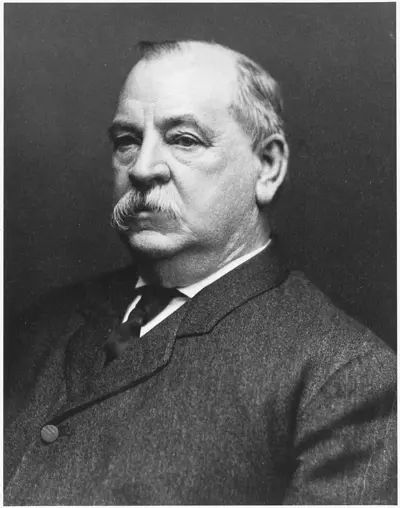
Stephen Grover Cleveland was an American politician and lawyer who served as the 22nd and 24th president of the United States from 1885 to 1889 and from 1893 to 1897. Cleveland is the only president in American history to serve two nonconsecutive terms in office. He won the popular vote for three presidential elections—in 1884, 1888, and 1892—and was one of two Democrats (followed by Woodrow Wilson in 1912) to be elected president during the era of Republican presidential domination dating from 1861 to 1933.
