Joseph Schumpeter Quotes
The banker, therefore, is not so much primarily a middleman in the commodity "purchasing power" as a producer of this commodity. However, since all reserve funds and savings today usually flow to him, and the total demand for free purchasing power, whether existing or to be created, concentrates on him, he has either replaced private capitalists or become their agent; he has himself become the capitalist par excellence.
Schumpeter, Joseph A. The Theory of Economic Development. Translated by Redvers Opie, Harvard University Press, 1934, p. 74.


Stamp was a banker and the 2nd richest man in England at the time. Yet he warned about aspects of banking that needed reform and regulation.

His answer was what Max Weber called “The Protestant Work Ethic.”


Mises defines government revenue in such a manner that it always relly belonged to individuals, therefore when government invests in enterprises that accumulate capital via profits, Mises does not consider it capital accumulation. One counterexample of this point is the George Washington Bridge in New York, built in Mises lifetime by Robert Moses of the New York Port Authority. The tolls on the bridge paid off the bondholders who financed much of the initial construction. But then capital started to accumulate at such a rapid rate that Moses was able to build other capital projects ranging from highways to the World Trade Center Buildings with capital constantly accumulated. The New York Port Authority under Moses generated more capital appreciation than any corporation that had been in existence at that point. And he could not even sell stock. However, the Port Authority and a few others were exceptions. Generally government did was unable to accumulate capital in its enterprises.

Morgan had arranged to lend the government $36 million in Gold when the national treasury was virtually bankrupt.


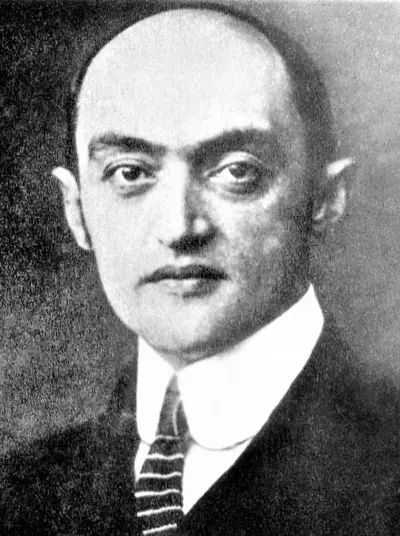
Joseph Aloïs Schumpeter was an Austrian political economist. Born in Moravia, he briefly served as Finance Minister of Austria in 1919. In 1932, he became a professor at Harvard University where he remained until the end of his career, eventually obtaining U.S. citizenship. One of the most influential economists of the 20th century, Schumpeter popularized the term "creative destruction" in economics.
