Thomas Hutchinson Quotes
The aversion, in the common people, to a silver and gold currency, had occasioned several tumultuous assemblies in and near the town of Boston. The paper, they said, was not worth hoarding, but silver and gold would all fall to the share of men of wealth, and would either be exported or hoarded up, and no part of it would go to the labourer, or the lower class of people, who must take their pay in goods, or go without
Thomas Hutchinson, 1711-1780, Colonial Governor of Massachusetts, The History of the Colony and Province of Massachusetts-Bay
Sourced by: Eigen's Political and Historical Quotations

This problem of capitalism needs solving, but has existed as long as capitalism has.

This quotation was particularly interesting for Americans of the early 21st century by which time, the United States had become the greatest debtor nation in the world.


Economists they world over have differed as to how critical it was to have a money supply that is based on a gold standard or other precious metal. United States history has had a dispute over whether the money should be backed by gold or silver. Finally, under the Richard M. Nixon administration, the United States went off the gold standard and American money ever since is only backed by the ‘full faith and credit’ of the United States. Some politicians like Paul believe this is a poor policy since it allows governments to control their own money supply irrespective of their gold or silver holdings. Paul goes further than most and sees freedom itself dependent on a precious metal standard. Most politicians disagree.

Later, William Jennings Bryan and the Populists turned this point into a major political issue. See Bryan’s Cross of Gold Speech.


Harvey was one of those who argued that silver and not gold should be the basis of American money. The country was growing and the amount of gold was relatively fixed; therefore money was scarce and many believed the English and American financiers were hording gold deliberately. The final solution was not a gold standard or a silver standard but what we have today—a currency backed only by the full faith and credit of the U. S.


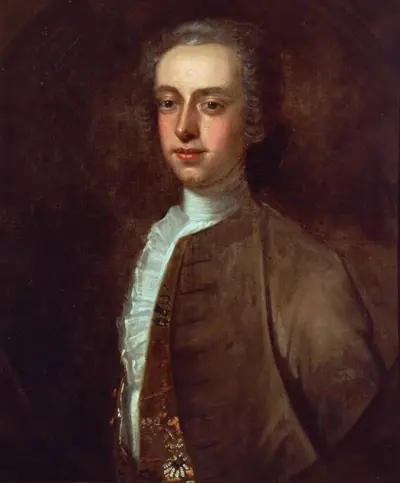
Thomas Hutchinson was a businessman, historian, and a prominent Loyalist politician of the Province of Massachusetts Bay in the years before the American Revolution. He has been referred to as "the most important figure on the loyalist side in pre-Revolutionary Massachusetts". He was a successful merchant and politician, and was active at high levels of the Massachusetts government for many years, serving as lieutenant governor and then governor from 1758 to 1774. He was a politically polarizing figure who came to be identified by John Adams and Samuel Adams as a proponent of hated British taxes, despite his initial opposition to Parliamentary tax laws directed at the colonies. He was blamed by Lord North (the British Prime Minister at the time) for being a significant contributor to the tensions that led to the outbreak of the American Revolutionary War.
