Harry S. Truman Quotes
The attack upon Korea was an outright breach of the peace and a violation of the Charter of the United Nations. By their actions in Korea, Communist leaders have demonstrated their contempt for the basic moral principles on which the United Nations is founded. This is a direct challenge to the efforts of the free nations to build the kind of world in which men can live in freedom and peace.
Truman, Harry S. "Radio and Television Address to the American People on the Situation in Korea," July 19, 1950. Public Papers of the Presidents of the United States: Harry S. Truman, 1950, U.S. Government Printing Office, 1965, p. 527.

The Secretary General was informed of the North Korean attack on South Korea:

When the United Nations partitioned Palestine into separate Jewish and Muslim states, the armies of all the Arab countries attacked the new nation which did not even have a formal Army. The Israelis were able to win the war.

3rd Earl Russell of Kingston. The military weak nations agreed with him, but the militarily strong ones did not—especially America and England which had the Atomic Bomb when others did not.


In both the First and Second World Wars the Western nations had a multilateral defense pact which did little good in the face of German aggression.

This is one of he earliest uses of the term “policemen of the world.”

The same sentiment has been attributed to Aristotle.


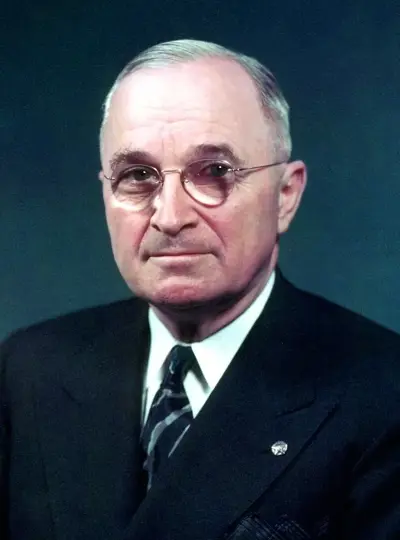
Harry S. Truman was an American politician who served as the 33rd President of the United States (1945–53). He served as a United States Senator from Missouri (1935–45) and briefly as Vice President (1945) before he succeeded to the presidency on April 12, 1945 upon the death of Franklin D. Roosevelt. He was president during the final months of World War II, and approved the plan to drop atomic bombs on Hiroshima and Nagasaki. Truman was elected in his own right in 1948. He presided over an uncertain domestic scene as America sought its path after the war and tensions with the Soviet Union increased, marking the start of the Cold War.
