Jeremy Rifkin Quotes
The antitrust litigation currently in the federal courts in the U.S. against Monsanto will be the test case in the life sciences, just as the Microsoft case was the test case in the information sciences.
Rifkin, Jeremy. Interview. Harvest of Fear, PBS Frontline, 2001.


See {642189} where Sherman explained some of the reasons for the law.


Here, an officer of a large corporation (Pittsburgh Plate Glass) makes the classic argument of large corporations about the anti-trust laws which prevent them from using their economic power to crush competition. The claim that the large corporations are at a disadvantage and handicapped in competing with small companies is easily refuted by the bankruptcy rate of small businesses which is large, and that of large corporations which is very small, and that of major monopolies which is virtually zero.


A justification of some mergers that would lessen competition was that the consumer would not be harmed as the merger will produce cost savings that could be passed on to the consumers. However, others argued that if the competition were reduced there would be no pressure on the merged companies to pass any savings along to the consumer. However, in this opinion, Justice Douglas set forth a basic principle of regulatory law: Even though the merger might have some consumer benefits, that is still no justification for doing.
Draft language is sometimes attributed to Senator George F. Hoar.


This volume roughly is to Islam what the Gospels are to Christianity. To most Muslims The Sunnah is a collection of holy material on the life of Mohammed. It is not of the force or importance as the Koran, but it is revered.


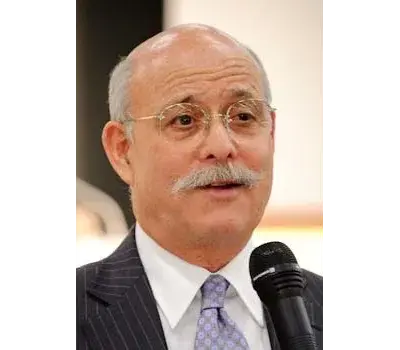
Jeremy Rifkin is an American economic and social theorist, writer, public speaker, political advisor, and activist. Rifkin is the author of 21 books about the impact of scientific and technological changes on the economy, the workforce, society, and the environment. His most recent books include, The Green New Deal (2019), The Zero Marginal Cost Society (2014), The Third Industrial Revolution (2011), The Empathic Civilization (2010), and The European Dream (2004).
