Lewis Tappan Quotes
The Anti-Slavery public have generously responded to our appeal, and sent the means to enable us to fit them out well, to pay their passages, supply them with many useful articles and give the Missionaries money to sustain themselves for a while.
Tappan, Lewis. Report of the Amistad Committee. Amistad Committee, 1841.


This bull was issued to Bishop Ferdinand located at Rubicon on the island of Lanzarote. Many critics of the Catholic Church point to the widespread use of slavery by Catholic laity and even the clergy during the Age of Discovery. It is clear, however, from the earliest appearance of slavery during this period that the official teaching of the Church condemned it as a crime subject to the sentence of excommunication ipso facto (by the very deed itself). The Church’s condemnation of “slavery,” however, did not extend to “just title” slavery, which approved of the practice in circumstances in which the person was deprived of their liberty justly. Specific examples have included slaves captured in war, persons condemned to slavery for a crime, and those who sold themselves into slavery. For an example of a type of “just title” slavery being legitimatised, see Nicholas V {612174}. In many cases the line between slavery for no morally justifiable reason, i.e. racial slavery, and “just title” slavery remained unclear to Catholic laity and clergy alike.

At the time Canada was one of the preferred destinations of escaping slaves traveling the Underground Railroad.

The first anti-slavery newspaper published in the United States & the first journal in America to advocate immediate, unconditional emancipation


See {633926} for a quotation from the text that transmitted the resolution.

This quotation illustrates the strong abolitionist tendency in the Ohio Territory. Under this clause, escaped slaves from Southern states would not be returned by the state authorities. Even more insulting to the slave enthusiasts of the South, if a Southerner brought any slaves into Ohio with them as was common for Southerners traveling with their personal slaves or horse team drivers, those slaves would be free. An interesting aspect of this clause of the Ohio Constitution was that the beginning was, word for word, copied from the Northwest Ordinance of 1787. See {618100}.
A few years later he had a clearer idea of what was to be done. However, the additional factor of the Civil War played a big part in driving his Emancipation Proclamation. See {609360}

The Republicans had broken off from the Whig Party and started a new one attracting some liberal Democrats also. The Republican Party described themselves as “radicals” and argued for major reform quickly.


Earlier {629154} Smith was much more sympathetic with slavery. His views evolved as you can see by the comparison. He stated that he had a vision and made two prophesies {629156} that indeed came true. The last idea of slave buyouts seemed plausible to many abolitionists initially when they were not really knowledgeable about the economics of slavery. However, once they studied it, it became clear what it would not work even if the Southerners would then be willing to accept Blacks as free laborers which most were not, The two biggest problems were: 1) the international slave trade had been abolished. The only source of new slaves for growth was breeding them. Therefore, having slaves had TWO economic values—the work that they could do and the reproduction of themselves. A critical mass of owned slaves produced an income forever. And for Southerners who were culturally adverse to work (see {629169}), just having cash for their slaves was not enough. They were the servants, the farm labor, and their recreational sex. 2) and most important, the value or the slaves of the South was greater than the economic value of all the land, all the farms, all the buildings, all the factories, and all the inventory of the stores of the South all put together. The Southern slaves were the majority of the wealth of the south. There was no asset that could ever produce enough value to pay for the slaves—even over time. It would be like trying to buy all the shares of all the corporations in America today. There is no asset big enough to raise the money to ever finance it. The idea may have worked in Colonial America or even prior to the outlaw of the international slave trade, but by the time anyone took the idea seriously it was economically no longer feasible.

Even before we had a Constitution there was major opposition to slavery. The “price” of the American Union was the acceptance of the slavery of the South. But the hypocrisy of a country based on liberty to allow and enforce slavery was not lost on the founding fathers. Ironically the abolitionists among the founding fathers were certain that they could persuade the Southern slaveholders of the error of slavery in a few years and things would be set right in the land. Even George Washington {630626}, and Thomas Jefferson and some other slaveowners at the time wished to see its abolition. Slaveholding Southern Founding Fathers in general were so wary of the abolitionists that they achieved structural, disproportionate, power in the new Constitution to ward off the abolitionists attempts to reform slavery.

Washington was from Virginia, the largest of the slave states, and he himself owned slaves. In his will he emancipated all his slaves. Most of his fellow Southern Slave owners however not only disagreed about the abolition of slavery but were adamant that slavery spread so that the abolitionists never attain a majority.

As an entertainer she had toured much of the world and seen American slavery and that of some other nations. She became a staunch abolitionist and like entertainers in the 20th and 21st centuries she used her celebrity to give anti-slavery lectures and perform for audiences where she donated the proceeds of the event to the abolition cause. She is a particularly interesting political figure in that she seems to be one of the first entertainers to perform for a social cause and become an activist.


The Union troops had just been routed at Bull Run. Many in the North thought that the war would be a short one with little disruption of loss of life. Here Norton, like so many others, provided a a more realistic assessment. Also note the reference to “barbarism” in the South, When the Union was formed, the Southern states were not as well developed as the North from an industrial, educational or cultural perspective. There were vestiges of aristocracy, crude law enforcement, and much more poverty (Virginia excepted) than in the North. Most Northerners thought that the South would reform—modernize and become more like the North, but instead the gulf became greater as the North itself developed and changed rapidly while the South was mired in its traditions with their aristocracy gaining more political, economic and cultural control. This attitude of Northern superiority, objectively valid though it may have been, was sorely resented by the South and this resentment has persisted into relatively modern times.

Jefferson’s views, actions and inactions regarding slavery are very complex and contradictory. This quotation is one example of the many statements and activities to end slavery. Yet he never freed his own slaves (as did George Washington) and he fathered a child by one of his slaves with no attempt at freeing even her and the child. The Andrew Dickson White article is one of the first serious studies of the Jefferson contradictions regarding slavery.
This prophecy written in the later years of Jefferson’s life turned out to be all too true. St. Domingo was an Island in the Caribbean where slavery produced a bloody war. The American Civil War would be far worse.
Jefferson was then the United States Minister to France. While in Paris he was offered membership by M. de Warville in the Society for the Abolition of the Slave-Trade. Jefferson felt that he had to decline because his joining would have been seen as a politically polarizing act, inappropriate for an Ambassador of the American government which was divided on the issue of slavery. Some criticize the refusal and argue that this would have been the perfect act to push the abolition perspective, and question Jefferson’s sincerity about slavery as he not only refused to join the society, but never freed his own slaves though it is argued that he never made enough money to afford to emancipate them.

There were no women’s shelters in the 19th century, and the police or sheriffs would not entertain a complaint from a wife for assault, sexual or otherwise. She compared the state of women to that of fugitive slaves a few decades earlier. Then there was the Underground Railroad and other institutions which would shelter and help the slaves. There was no such mechanism for women abused in their marriage.
Essentially, the case of moral hazard was made against paying the slave owners. Lincoln took a pragmatic approach. However, not only was Northern opposition too strong for this proposal, but the Southern slave holders would never agree to selling their slaves. What Lincoln and most “pragmatic” Northerners did not realize is that even if the slave owners would get a fair market price for the slaves, they would be left with land and no way to work it. Their families would have no servants. They might have to work themselves like Northern farmers did, and their entire standard and style of living would be destroyed. Their sons were not well educated as many Northern young men were and were brought up to be gentlemen, politicians, and occasional soldiers—not work with their hands. They could not compete. And the slaveholders were right as the whole history of Reconstruction and backwardness demonstrated for more than 100 years.
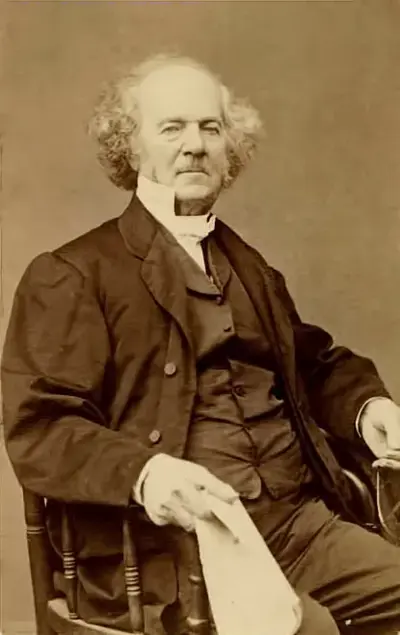
Lewis Tappan was a New York abolitionist who worked to achieve freedom for the enslaved Africans aboard the Amistad. Tappan was also among the founders of the American Missionary Association in 1846, which began more than 100 anti-slavery Congregational churches throughout the Midwest, and after the American Civil War, founded numerous schools and colleges to aid in the education of freedmen.
