Voltaire Quotes
The antiquity of an abuse is no justification for its continuance.
For a later version of this notion see Albert of Saxe-Coburg {592978}
Voltaire, 1694-1778, [Francois-Marie Arouet], French Historian & Dramatist, Quoted in Nigel Rees, Mark My Words
Sourced by: Eigen's Political and Historical Quotations

For an earlier expression of this idea, see Voltaire {612730}


The nobles of the city were in rebellion and fought the English Prince of Wales. When the city was taken, the poor people as well as the nobles were executed for their part in the “rebellion.” However, the poor had no say in the matter, and it was not they who ordered the city gates shut and decided to undergo a siege, which in this case was not successful. Limoges was a heavily walled city, well provisioned for a siege, but the English had miners who undermined part of the city walls and crashed them into the moat and allowed the English to walk in easily.


The Republican Party condemned polygamy and slavery in its party platform of 1856


The Bank of the Untied States was not a government entity. It was a privately owned. Jackson arranged its demise. See {630653}

Although English, Cobett spent time in America and published a newspaper, The Porcupine Gazette, in Philadelphia. We was very conservative but on the issue of slavery his resembled a liberal point of view. He never used sugar, coffee, or rum because slave labor produced them. However, he advocated legally enslaving lazy people, blacks and whites, who would not work.

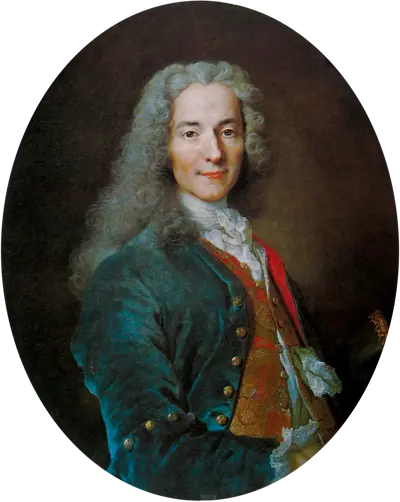
- Born: November 21, 1694
- Died: May 30, 1778
- Nationality: French
- Profession: Writer, Philosopher
François-Marie Arouet, known by his nom de plume Voltaire (/vɒlˈtɛər, voʊl-/; also US: /vɔːl-/; French: [vɔltɛːʁ]), was a French Enlightenment writer, historian, and philosopher famous for his wit, his criticism of Christianity—especially the Roman Catholic Church—as well as his advocacy of freedom of speech, freedom of religion, and separation of church and state.
