Bill Bradley Quotes
The answer to too much debt is not more debt; it is less debt.
Commenting on the practice of making loans to repay old loans:
William W. Bradley, U.S. Senator (Democrat, NJ), Candidate for Democratic Presidential Nomination, Interview, PBS American Interests, March 3, 1990
Sourced by: Eigen's Political and Historical Quotations


He was referring to making the idea of federal deficits emotionally negative.


At the time, many conservatives were threatening not to increase the debt ceiling unless they could get their way on the budget negotiations which would come up later. The Congress had earlier actually committed to spend the amounts when they voted the appropriations that enabled the spending and increasing the debt. Most countries do not have this second stage in that there is nothing the Congress can possibly do to change get back the money that they already voted to be spent, and the process of raising the debt ceiling must be done else the “full faith and credit” of the United States.


Almost every major corporation that is growing must borrow money to finance the growth. There is a great temptation to do this continuously, as if all works out the borrowed money is paid back and the nation has grown. However, not every investment succeeds, and when they do, few nations will take the growth and save it for a future date when a national investment does not work out as well as hoped. Gradually national debt as a proportion of the economy gets larger and larger and it makes mew investments more and more difficult to succeed because of the higher rates of interest that must be paid. Every modern country must find a balance. Those that do not can have a financial disaster such as Greece in the early part of the 21st century.
_0_thumbnail_47x47.jpg "Bill White, Mayor of Houston, Texas")

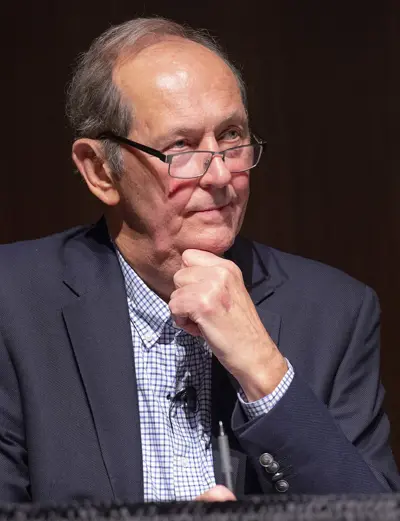
William Warren Bradley is an American politician and former professional basketball player. He served three terms as a Democratic U.S. Senator from New Jersey (1979–1997). He ran for the Democratic Party's nomination for president in the 2000 election, which he lost to Vice President Al Gore.
