Alexander Meiklejohn Quotes
The Amendment might have said, “Except in times and situations involving 'clear and present danger' to the national security, Congress shall make no law abridging the freedom of speech.” Or it might have read, “Only when, in the judgment of the legislature, the interests of order and security render such action advisable shall Congress abridge the freedom of speech.” But the writers of the Amendment did not adopt either of these phrasings or anything like them.
Alexander Meiklejohn, 1872-1964, Philosopher & President of Amherst College, Congressional Testimony on the 1st Amendment, 1955
Sourced by: Eigen's Political and Historical Quotations


The Bill of Rights only has 10 amendments. These are the two that did not get ratified by the states.

Though not very dramatic or succinct, this is a very important quotation in American History. The original drafters of the Constitution concentrated on limiting the powers of the executive—the role of the King. But the Congress had no limits placed on them. In Britain, to this day, the Parliament can do whatever they wish as there is no restraint on them other than their prudence and reasonableness. Madison used the example of the Alien and Sedition Acts—huge infringements on the rights of Americans—to show why the legislative branch must also be more restrained and limited. And that was the logic behind adding the Bill of Rights to our Constitutions.


In 1949 the NATO treaty was signed. There was concern that a phrase in the treaty authorizing signatories to take "such action as it deems necessary, including the use of armed force" would undermine Congress's powers:

In 1836 the House of Representatives adopted the so-called "Gag Rule" whereby the house could not act on all further petitions regarding slavery, even though thousands of petitions were being received. Adams was one of the few who protested the Gag Rule:. Adams even submitted petitions with which he did not agree:. Every year Adams attempted to get the Gag Rule repealed. He was even threatened with censure for his efforts, but his status as an ex-president protected him. Finally, in 1844, Adams' perennial resolution carried:

When asked for his position on abortion, candidate Bush answered:. Nine years later, President Bush proposed a constitutional amendment to overturn the Supreme Court's ruling on flag desecration.

Patrick Henry, a political opponent of Madison's, spread rumors in Madison's Virginia home district that Madison was perfectly satisfied with the Constitution as it was drafted. Madison felt the need to set the record straight, and this letter was widely circulated by his friends.

Marshall did not crate this concept or some its phraseology out of whole cloth. See Rufus King {610245} for a Constitutional Convention basis for the statement.
This may just have been a note to himself of a draft that he decided not to send. As with today, the people who would feel aggrieved by not being allowed to have Congressional Chaplains are much more passionate about the issue than the those who see Chaplains as unconstitutional. Thus Chaplains remain.


In a 1949 dissenting opinion in Terminiello v. Chicago Jackson claimed the majority view would “convert the Bill of Rights into a suicide pact.”


He was commenting on the Constitution that had come out of the 1789 Constitutional Convention in Philadelphia and did not yet have the Bill of Rights.


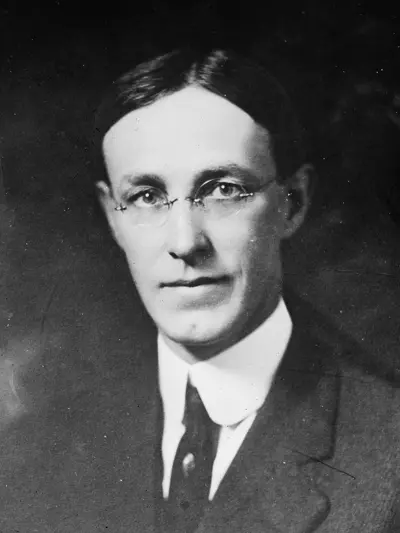
Alexander Meiklejohn was a philosopher, university administrator, educational reformer, and free-speech advocate, best known as president of Amherst College.
