Henry L. Ellsworth Quotes
The advancement of the arts (technology) from year to year taxes our credulity, and seems to presage the arrival of that period when human improvement must end.
See {70777} for an even more dire prediction.
Henry L. Ellsworth, 1791-1858, U. S. Commissioner of Patents, Annual Report of the Patent Office, 1843
Sourced by: Eigen's Political and Historical Quotations


By “arts” Jefferson meant the mechanical arts—inventions and engineering. Jefferson Extrapolated the science and technology progress at the time to the future in a way that few others did at that time.


Vladimir Lenin. After the Russian Revolution the Soviet State rejected the use of a copyright and patent system with the notion that all intellectual property belonged to the state. According to some political economic theorists, this would portend great difficulty in obtaining innovative and creative output in the arts, industry, and sciences. However, in the next 50 years, Russia went from a backward nation to one of the most scientifically sophisticated in the world and their creative arts output, quality and quantity was second to none. They did not fare as well in consumer technology although their military technology was very powerful and all the more amazing considering where they were in 1918 when the Russians adopted these policies. The issue of whether artists, scientists, and inventors need exclusive control of their output in order to be motivated to create has been in dispute for years.


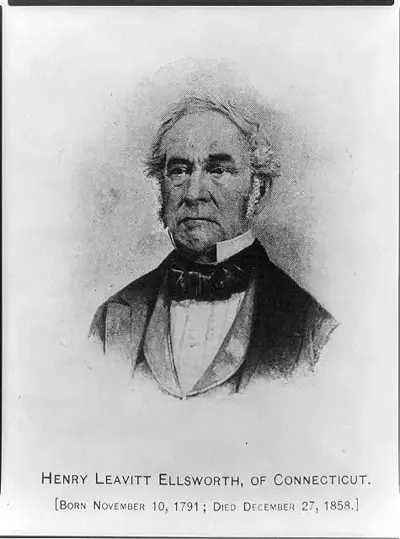
Henry Leavitt Ellsworth was a Yale-educated attorney who became the first Commissioner of the U.S. Patent Office, where he encouraged innovation by inventors Samuel F.B. Morse and Samuel Colt. Ellsworth also served as the second president of the Aetna Insurance Company, and was a major donor to Yale College, a commissioner to Indian tribes on the western frontier, and the founder of what became the United States Department of Agriculture.
