Christopher Marlowe Quotes
That perfect bliss and sole felicity, the sweet fruition of an earthly crown.
Marlowe, Christopher. Tamburlaine the Great, Parts 1 and 2. Edited by Matthew R. Martin, Broadview Press, 2014, p. 77.


The French King had paid the cost of the scientific experiment. Royal and Wealthy patrons together with the “sweat equity” of the scientists funded most scientific research until WWII in the 20th century in America. Since then national governments have funded larger and larger proportions of scientific research.

Windsor was the Kings palace and the King felt that was all he really controlled.


Constitutional Bishops in Revolutionary France were elected by the people, not appointed by a hierarchy. Upon hearing the motion, the assembly rose to its feet and passed it by acclamation. This was the end of the French Monarchy and the nobility—for a while.


1st Duke of Wellington. The King was somewhat delusional, and there is no historical records of his ever having personally fought in the Napoleonic wars at all. This quotation has often been nominated for the most tactful in history.


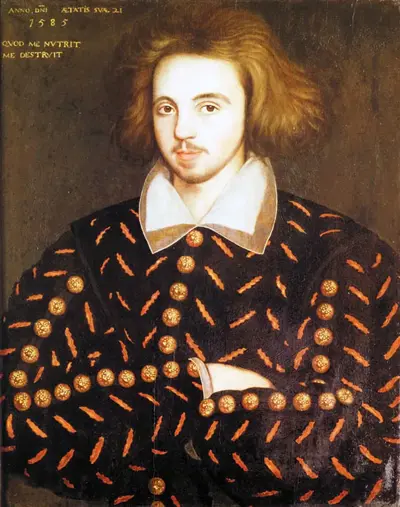
Christopher Marlowe, also known as Kit Marlowe, was an English playwright, poet and translator of the Elizabethan era. Modern scholars count Marlowe among the most famous of the Elizabethan playwrights; based upon the "many imitations" of his play Tamburlaine, they consider him to have been the foremost dramatist in London in the years just before his mysterious early death. Some scholars also believe that he greatly influenced William Shakespeare, who was baptised in the same year as Marlowe and later succeeded him as the pre-eminent Elizabethan playwright. Marlowe was the first to achieve critical notoriety for his use of blank verse, which became the standard for the era. His plays are distinguished by their overreaching protagonists. Themes found within Marlowe's literary works have been noted as humanistic with realistic emotions, which some scholars find difficult to reconcile with Marlowe's "anti-intellectualism" and his catering to the taste of his Elizabethan audiences for generous displays of extreme physical violence, cruelty, and bloodshed.
