Emir Kusturica Quotes
That is a Medieval way of drawing history, in which they do not respect the law and want the rest of the world to respect the law. That's not possible.
Emir Kusturica, Serbian, Sarajevo-born writer and film director, Comment on his understanding of the American foreign policy concept of Unilateralism
Sourced by: Eigen's Political and Historical Quotations


With Germany’s WWII history of military aggression, even over 60 years later, that country was very cautious about any use of military force and unilateral force was out of the question.


Terrorism even then put strains on traditional diplomacy where bombers would take sanctuary or raise money in countries whose diplomatic policy was opposed to terrorism of all types. At this particular time, Irish terrorists would raise money in the United States to support the terrorists bombing English targets.


See Benedict Spinosa for an earlier absense or war view. Also, JFK more recently.

With promises the success lies in following through and keeping the promise which is usually very costly. A threat that fails meanwhile can be the most expensive thing. We make a threat to deter a foreign power from something. Failure occurs when they are not intimidated and go ahead anyway. Then if we follow through on the threat, that is very costly—a war, a trade embargo, or whatever. Not following through on the threat is the costliest of all as we lose our credibility, trust and honor.

Misha Saakashvili, the President of Georgia, the ex-Soviet State, had a good bit of support in American political circles and decided to start a military conflict with Russia attacking a disputed area whose people had rejected Georgia and preferred the Russian affiliation and control. He was confident that the US would protect him from major retaliation. The Russians first moved troops into the attacked area and then started attacking Georgia military assets. Rice and the Russian Foreign minister were negotiating a cease fire on which they agreed to details and were going to impose them on Georgia. However, Lavrov demanded that Georgia President Saakashvili be deposed. Either nation had the power to do this, and both had in many past instances deposed or overthrown the leaders of other nations—democratically elected or not. This quote is very interesting because in this particular case the United States was stating its idealistic policy and not its “real-politic: that it exhibited in helping to bring down and depose democratically elected in Iran, Chile, Vietnam, Venezuela, Haiti, and others. Ironically, there were many in the US who wanted Saakashvili deposed for unilaterally starting a military conflict Russia that had to involve the U. S.


This was meant as a criticism of Webster, but must people saw it as a compliment. What Clarridge and other old hands at the CIA could never get straight was that they were supposed to break the other countries’ laws but not the laws of the United States. They were supposed to lie to other countries, but not to our President and Congress. This has been a constant problem for United States intelligence agencies. Some scholars of espionage believe that a good spy or spy master lies so often that it is part of his nature to do so as well as break laws. Psychologically it is difficult for them not to lie to anyone and they have little respect for laws. Webster fired Clarridge when Webster reformed the CIA but in the process he alienated most of the “veterans”.
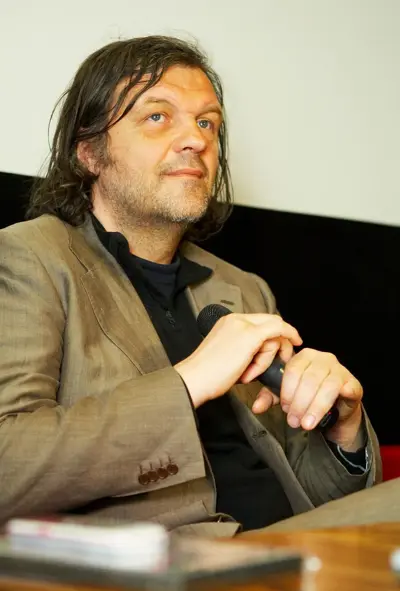
Emir Kusturica is a Serbian filmmaker, actor and musician. He also has French citizenship. He has been recognized for several internationally acclaimed feature films, as well as his projects in town-building. He has competed at the Cannes Film Festival on five occasions and won the Palme d'Or twice (for When Father Was Away on Business and Underground), as well as the Best Director prize for Time of the Gypsies.
