George Mason Quotes
That in all capital or criminal prosecutions a man bath a right to demand the cause and nature of his accusation, to be confronted with the accusers and witnesses, to call for evidence in his favor, and to a speedy trial by an impartial jury of twelve men of his vicinage, without whose unanimous consent he cannot be found guilty; nor can he be compelled to give evidence against himself; that no man be deprived of his liberty, except by the law of the land or the judgment of his peers.
Mason, George. "The Virginia Declaration of Rights." 12 June 1776. The Papers of George Mason, 1725-1792, edited by Robert A. Rutland, vol. 1, University of North Carolina Press, 1970, p. 288.


Note the use of the phrase “against the government.” One of the unique aspects of the American Constitution and The Bill of Rights is that the government is considered a potential and even probable infringer on the liberties of the people. It is almost as though the government was the potential enemy. Modern libertarians state this very explicitly and it is ever present in the views of both the right and left wings of American politics. Most centrists recoil at the thought that some citizens see the government as the enemy, but even in America there have been times where the government has infringed on the rights of citizens only to have the courts or future administrations and Congresses correct the error.


She was referring to the slander that was commonly used by her fellow Republican, Senator Joseph P. McCarthy in his demagoguery. She was the first member of the Senate to Condemn McCarthy for his abuse and lies. Led by her example, the other senators got over their fear of McCarthy attacking them and the Senate Censured the Demagogue.


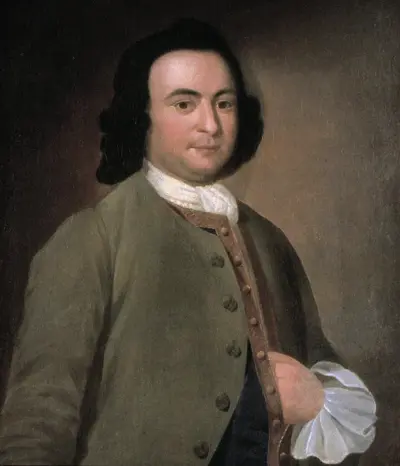
George Mason IV was an American planter, politician and delegate to the U.S. Constitutional Convention of 1787, one of three delegates who refused to sign the Constitution. His writings, including substantial portions of the Fairfax Resolves of 1774, the Virginia Declaration of Rights of 1776, and his Objections to this Constitution of Government (1787) opposing ratification, have exercised a significant influence on American political thought and events. The Virginia Declaration of Rights, which Mason principally authored, served as a basis for the United States Bill of Rights, a document of which he has been deemed a father.
