Susan B. Anthony Quotes
I have many things to say. My every right, constitutional, civil, political and judicial has been tramped upon. I have not only had no jury of my peers, but I have had no jury at all.
An Account of the Proceedings on the Trial of Susan B. Anthony, on the Charge of Illegal Voting, at the Presidential Election in Nov., 1872. Daily Democrat and Chronicle Book Print, 1874, p. 82.

Note the use of the phrase “against the government.” One of the unique aspects of the American Constitution and The Bill of Rights is that the government is considered a potential and even probable infringer on the liberties of the people. It is almost as though the government was the potential enemy. Modern libertarians state this very explicitly and it is ever present in the views of both the right and left wings of American politics. Most centrists recoil at the thought that some citizens see the government as the enemy, but even in America there have been times where the government has infringed on the rights of citizens only to have the courts or future administrations and Congresses correct the error.

As a woman, Anthony was found guilty of “illegal voting” in the Presidential election of 1872. Fining her $100 the judge asked if she had anything to say. This was her reply.


The questioned policy was that of the NSA collecting metadata on virtually all phone and other electronic communications made in or into the United States. The issue of the unconstitutionality was not then settled, with some federal courts and bodies saying Yes and other saying No.

The choice is usually contrasted between guilty persons going free, rather an innocent one be adjudicated guilty. But here the justice tells us that the avoidance of an innocent person being subject to easy arrest is important enough to have a system where guilty people sometimes escape justice.

Americans are divided as to whether this should be encouraged and helped or not.


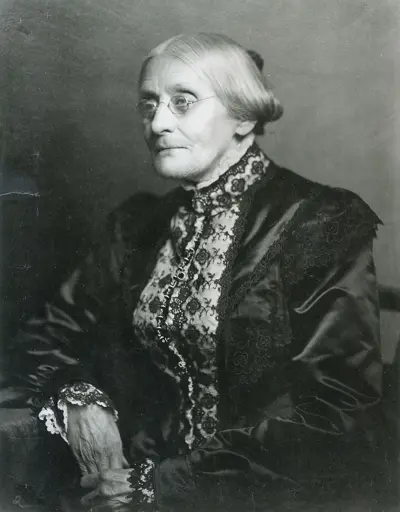
Susan B. Anthony was an American social reformer and women's rights activist who played a pivotal role in the women's suffrage movement. Born into a Quaker family committed to social equality, she collected anti-slavery petitions at the age of 17. In 1856, she became the New York state agent for the American Anti-Slavery Society.
