Edward Snowden Quotes
There is no justification for continuing an unconstitutional policy with a zero percent success rate.
The questioned policy was that of the NSA collecting metadata on virtually all phone and other electronic communications made in or into the United States. The issue of the unconstitutionality was not then settled, with some federal courts and bodies saying Yes and other saying No.
Edward Snowden, NSA & CIA Employee, Whistleblower & Leaker of Classified Information, On-Line Communique, Quoted on CNN News, January 26, 2014
Sourced by: Eigen's Political and Historical Quotations


Hayden was then ordered to go ahead with several of the ideas for which “no authority existed” including massive secret wiretapping of phone calls that were against the law as it existed. Cheney and the President decided not to ask Congress for a legal change, but took the position that if the President says to do it, it cannot be illegal as he is the Commander in Chief. The lower Federal Courts and the Supreme Court ruled that the doctrine was preposterous and un constitutional.

He was the Chairman of the Senate Judiciary Committee. The Islamic fundamentalist terrorists are repugnant to us because they have no respect for Civil and Human Rights and would deny us what we value so highly and for which so many Americans have sacrificed. We are little better off if we surrender our civil rights in order to cope with the problem of losing our civil rights to the likes of the Taliban and Al Qaeda.

Snowden, was a contract worker for Booz Allan assigned to the National Security Agency (NSA). He felt that some of the NSA activities were illegal and unethical and tried to complain to NSA officials who rebuffed him. Despite the fact that he had signed an agreement not to do so, he copied many critical, classified documents that exposed much of the NSA activities that the NSA officials had denied existed—including lying under oath to the Senate. He then made many of them public, violating his oath, breaking the law, and opening up an entire area of government spying which most Americans knew nothing about and about which senior government officials had lied under oath to Congress. They of course wanted to prosecute Snowden who had told the truth, while they had lied. For many Americans, this became a moral and ethical conundrum.

People at both ends of this polarized issue had deep suspicions of people at the other pole.
He was the Chairman of the Senate Judiciary Committee.

Major leaks made public the fact that the NSA was hacking into the European and other foreign servers of Google, Microsoft and other technology companies and vacuuming up 500 million internet communications every day. (It would be illegal for them to do this in the United States, but via the outside USA servers they capture the information of US Citizens sending E-mail within the United States. The reaction of many foreign government was outrage as their citizen’s private communications were being captured as well. They began to take steps to curtain their country’s high utilization of American company data storage and transmission and regulate the American firms much more extensively. So American company business and profits were damaged by the NSA surveillance programs which the companies did not know about.

Snowden, was a contract worker for Booz Allan assigned to the National Security Agency (NSA). He felt that some of the NSA activities were illegal and unethical and tried to complain to NSA officials who rebuffed him. Despite the fact that he had signed an agreement not to do so, he copied many critical, classified documents that exposed much of the NSA activities that the NSA officials had denied existed—including lying under oath to the Senate. He then made many of them public, violating his oath, breaking the law, and opening up an entire area of government spying which most Americans knew nothing about and about which senior government officials had lied under oath to Congress. They of course wanted to prosecute Snowden who had told the truth, while they had lied. For many Americans, this became a moral and ethical conundrum.

at the NSA collection of every American’s private e-mails, phone calls, and other digital communications. Referring to the NSA program of collecting information on all electronic communications of all American Citizens. See {636963} for more on the case.
The NSA in defending their program stated that they were looking for a “needle in a hay stack”. Logically, her criticism would seem to make great sense. However, the new computer technology makes looking for “needles” very fast and inexpensive. Therefore, they argue, the size of the haystack does not matter.
The NSA had been publicly exposed (by the Edward Snowden leaks) as collecting data on virtually every American’s phone and on-line conversation, and criticism was rampant.

He was referring to the massive surveillance NSA program whereby all telephone calls and most digital communications for every American was secretly tapped and stored in an NSA data base. The Senators of the Intelligence Oversight Committee received information in Classified executive sessions but they were not allowed to disclose anything that they learned in the briefings—even something as huge and probably unconstitutional as this program. Moreover, even when officials of the Intelligence Services lied under oath (see {634917}) in open session, the Senators could not disclose this fact.


He was the Chairman of the Senate Judiciary Committee. The NSA had hacked into the servers of these firms and others that were located out of the country. (They would need to have a warrant if inside the country.) The companies had never known it until Edward Snowden made this practice public. The result was, the public was learning that there was no privacy in any of their e-mail, social media activity, exchange of photos or videos or anything else. The companies feared that this would then harm their business, and that the techniques NSA used to hack there servers would then be discovered and used by others to steal identities, credit cards and do such other damage to customers. Even if the particular hacking methods were not leaked to the bad guys, they, knowing that the servers were vulnerable, would be encouraged to work to figure it out.
He was the Chairman of the Senate Judiciary Committee. The intelligence and law enforcement advocates of reducing privacy rights so that law enforcement can prevent acts of terrorism frame the question as a tradeoff between civil right and safety. However, as Leahy and many others point out, we would not be much safer if we gave up all our ivil rights. Further, hundreds of thousands of American have given their lives so that we would have those civil rights. Without them what are we protecting.
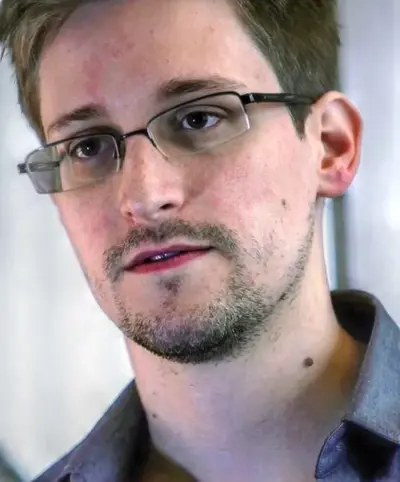
Edward Joseph Snowden is a former computer intelligence consultant who copied and leaked highly classified information from the National Security Agency (NSA) in 2013 when he was a Central Intelligence Agency (CIA) employee and subcontractor. His disclosures revealed numerous global surveillance programs, many run by the NSA and the Five Eyes Intelligence Alliance with the cooperation of telecommunication companies and European governments, and prompted a cultural discussion about national security and individual privacy.
