Paul A. Volcker Quotes
That day the U.S. announced that the dollar would be devalued by 10 percent. By switching the yen to a floating exchange rate, the Japanese currency appreciated, and a sufficient realignment in exchange rates was realized. Joint intervention in gold sales to prevent a steep rise in the price of gold, however, was not undertaken. That was a mistake.
Volcker, Paul A., and Toyoo Gyohten. Changing Fortunes: The World's Money and the Threat to American Leadership. Times Books, 1992, p. 119.


What Franklin Delano Roosevelt began, President Nixon would in 1971 complete by removing America from the gold standard entirely and ending fixed rates of exchange. There have been those in government who did not understand the modern economics of money and who believed that currency had to have a fixed rate of exchange for gold or silver otherwise it was worthless. Roosevelt had to deal with them as did Nixon later. Even into the 21st century when it had been amply demonstrated that the best currency in the world was the United States dollar precisely because it was backed up by the full faith and credit of the United States Government, there were those who complain that United States money is not sound currency and argue for the return of the gold standard.

At the time the United States was on the Gold Standard and all our money was backed by gold. Root and others were afraid that a Federal Reserve Bank, a proposal that was being debated in Congress, would cause a large amount of paper money to be printed which other nations would obtain through trade and then exchange that for American gold—a process which would deplete the American gold supply. A few years before, William Jennings Bryan had argued that the Gold Standard did not allow America sufficient ability to increase the money supply to serve the growing population and economy. See {640992}.

De Gaulle is commenting on the role of the dollar in American dominance.


The assumption was that money would always be backed by gold or silver. In effect, raising or allaying the money was to change the amount of gold or silver that a particular denomination of money would be able to be exchanged for. This is one of the interesting proofs that these processes did nothing economically—for if they could, no one would want the money. This has always been a weakness or a strength—depending on one’s political point of view—of a gold standard.
While devaluation may have been intended to have the effect of stimulating exports and inhibiting imports, many countries have populations which feel “cheapened” by the process—that they are worth less as laborers and their raw materials are valued less in the eyes of the world.

“Pegged” exchange rates are a country’s money where the Government sets the value of the money in terms of some other currency—usually American dollars. The advantage of a pegged currency is that it is stable and does not fluctuate day to day. The disadvantage is that people realize that the value is artificial and other countries will not accept the pegged currency. Worse natives try and get as many dollars as they can because the fear that the Government will devalue and change the rate of exchange of the pegged currency.

What the Prime Minister was trying to say is that the buying power had not been diminished suddenly for local and non-imported items.


This was a very astute prediction. At the time, the United States gold mining production was second only to South Africa and American currency was based on the gold standard which seemed to all to be permanent. Half a century later, the U. S went off the gold standard.
This is an excellent historical example of how damaging it can be for a country if its leaders do not understand the technicalities of economics and currency manipulation.


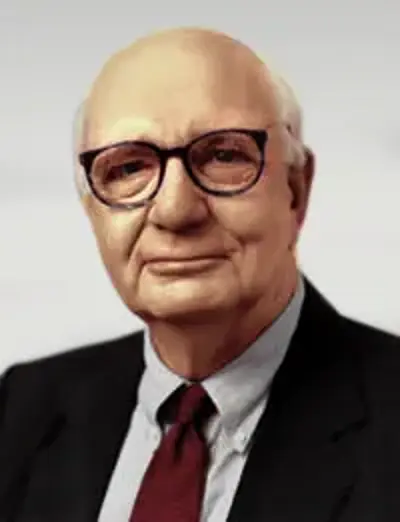
Paul Adolph Volcker Jr. was an American economist. He served two terms as the 12th Chair of the Federal Reserve under U.S. presidents Jimmy Carter and Ronald Reagan from August 1979 to August 1987. He is widely credited with having ended the high levels of inflation seen in the United States during the 1970s and early 1980s. He was the chairman of the Economic Recovery Advisory Board under President Barack Obama from February 2009 until January 2011.
