James K. Polk Quotes
Thank God, under our Constitution there was no connection between Church and State, and that in my action as President of the United States I recognized no distinction of creeds in my appointments office.
Polk, James K. The Diary of James K. Polk During His Presidency, 1845 to 1849, edited by Milo Milton Quaife, vol. 1, A.C. McClurg & Co., 1910, p. 409.


This publication was one of the best selling in the entire history of America. Rarely has a single publication been read by as high a proportion of a population. Those who support the maintenance of a strict separation of Church and State in America often point to this quotation and the popularity of Common Sense as evidence that not only were the founding fathers in favor of strict separation but so was the general Colonial American public.


The same phrase was used by Count de Montalembert at a Catholic conference in Malines, August 20, 1863, and is sometimes attributed to him.

This quotation is one of the first to make the critical observation that the only time that tolerance of a religion is necessary is when there is an established church and others that deviate from it. If there is no established church, as the Founding Fathers envisioned, there is no preeminent church to do the tolerating. All are equal. In practice, Protestant churches were proportionately dominant in early America and up through the 20th century. So most of the issue of tolerance problems in America were cultural. And there is still a minority of Christians who believe that America should be a Christian country and other religions should be “tolerated.” However, Clinton and most of the founders did not want to see even general Christianity established as the national religion even they it was the majority religion.


The Senate was presented with James Madison’s Language for the First Amendment. These three alternatives were proposed and rejected. The rejected versions turn out to have been very important. Some have argued that the First Amendment does not prohibit Congress making laws regarding religion as long as it doesn’t favor one religion over another—for example pay for clerics of all religions. However, that was the third proposal and it was rejected in favor of the high wall of separation proposed by Madison.


This was more than a decade before the Bill of Rights was created and passed. Delaware was so concerned about the separation of church and state that they would not allow any religious cleric or official, to serve in any position of the state militia or government. New York State the following year {621429} placed the same prohibition against clerics serving in any branch of the government. The U. S. Bill of rights did not go that far, but there are a number of religions that also support this notion. Perhaps the most dramatic example was Pope John Paul’s prohibition of Priests running for elective office.


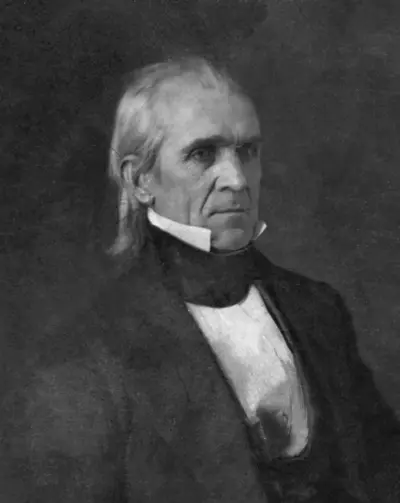
James Knox Polk was the 11th president of the United States, serving from 1845 to 1849. He previously was Speaker of the House of Representatives (1835–1839) and Governor of Tennessee (1839–1841). A protégé of Andrew Jackson, he was a member of the Democratic Party and an advocate of Jacksonian democracy. Polk is chiefly known for extending the territory of the United States through the Mexican–American War; during his presidency, the United States expanded significantly with the annexation of the Republic of Texas, the Oregon Territory, and the Mexican Cession following the American victory in the Mexican–American War.
