Euripides Quotes
Ten thousand men possess ten thousand hopes.
Euripides. The Bacchae. Translated by Philip Vellacott, Penguin Books, 1973, p. 217.


Alexander’s move was a stroke of genius. He wanted to amass a great army but did not have the funds in the royal treasure to pay for it. Instead of squeezing the nobles for more funds, he gave everything away. This signaled a willingness to share the wealth so that the nobles financed the army so that they could amass more with the booty of victory. Perdiccas and a few others refused their shares and committed themselves to Alexander’s “hopes.” See {612208} for Alexander’s mother’s view of his generosity later.


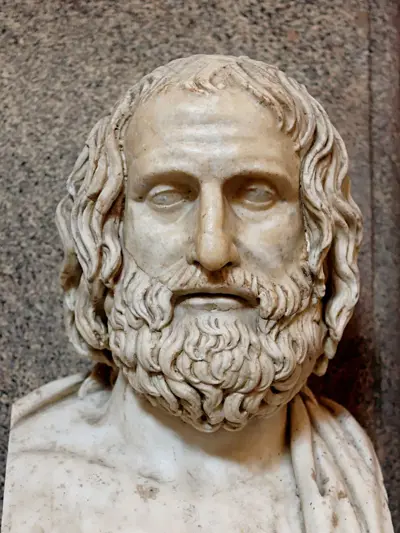
Euripides (/jʊəˈrɪpɪdiːz/; Greek: Εὐριπίδης Eurīpídēs, pronounced [eu̯.riː.pí.dɛːs]; c. 480 – c. 406 BC) was a tragedian of classical Athens. Along with Aeschylus and Sophocles, he is one of the three ancient Greek tragedians for whom any plays have survived in full. Some ancient scholars attributed ninety-five plays to him, but the Suda says it was ninety-two at most. Of these, eighteen or nineteen have survived more or less complete (Rhesus is suspect). There are many fragments (some substantial) of most of his other plays. More of his plays have survived intact than those of Aeschylus and Sophocles together, partly because his popularity grew as theirs declined—he became, in the Hellenistic Age, a cornerstone of ancient literary education, along with Homer, Demosthenes, and Menander.
