Quanah Parker Quotes
Tell the president that the buffalo is my old friend, and it would make my heart glad to see a heard once more roaming around.
Quanah Parker, 1852-1911, Comanche Indian Chief, 1895
Sourced by: Eigen's Political and Historical Quotations

In 2006 at the age of 44 he was killed while televising and underwater scene with stingrays who are not very dangerous usually. Most people recover from a stingray barb even though it has a mild toxin. However in a very rare occurrence, he was stung right in the heart.

His lesson was that in order to have a society that will protect animals, we must first enable citizens to know about the animals and then to love the animals.

New thinking regarding some endangered species calls for relocating the surviving members of the specie to a location more hospitable to survival of the species and where they animals will come into less conflict with man and development.

He was visiting the Congo where heavily armed poachers were thwarting the outgunned Wildlife Rangers. Klaxon then began training the Wildlife Rangers and getting them more heavily armed and skilled with their weapons and then fought with them and the poachers were routed and the Rangers were much more successful in protecting the elephants and rhinos who had been slaughtered for their tusks and horns, both of with commanded very high prices in Asia.
Many of the wildlife poachers are armed with heavy weapons and modern qeopositioning equipment. The think nothing of killing Wildlife Rangers who try to stop them from killing elephants and rhinos for their tests and horns which are highly prized in Asia. Much of the funding to protect the wildlife of Africa comes from United State Non Profit Organizations for whom spending resources to train Wildlife Rangers to use heavy weapons is not very comfortable. But Kalron and others argue that if the local authorities cannot confront the poachers, there is no practical way to preserve the wildlife.


Foreign species escape, multiply, and take over a habitat, destroying the natural species or effecting the plant life usually negatively.
He made a specialty of finding potential new pharmaceuticals amongst rare species producing an important economic reasons for keeping the species healthy/

There are a few conflicts between the legislation to protect the border by using vehicles and building facilities and protecting the endangered species that might be in the area. These were worked out by allowing the Border Patrol, if they thought there was a serious boarder problem, to make the decision of how to proceed but in the general cases to balance off the costs and benefits to border guarding and the endangered species and wilderness. Chaffetz was a rabid anti environment advocate who opposes almost all accommodations for endangered speices. Such extreme statements as these, produces an opposite extreme reaction on the part of some environmentalists who will make no compromise even if benign, as they believe that CHaffetz and the few others who think like he, will then gut the entire legislation as they are not acting in good faith. The result is a polarization in which the extreme’s fight it out and the reasonable middle ground is ignored.
Violating these Iroquois “environmental regulations” were not mere technicalities but were enforced by war if necessary. The Iroquois were very sophisticated diplomatically and had appointed Garangula, a chief of one of the Iroquois tribes, to be their Ambassador Plenipotentiary in negotiations with the French.


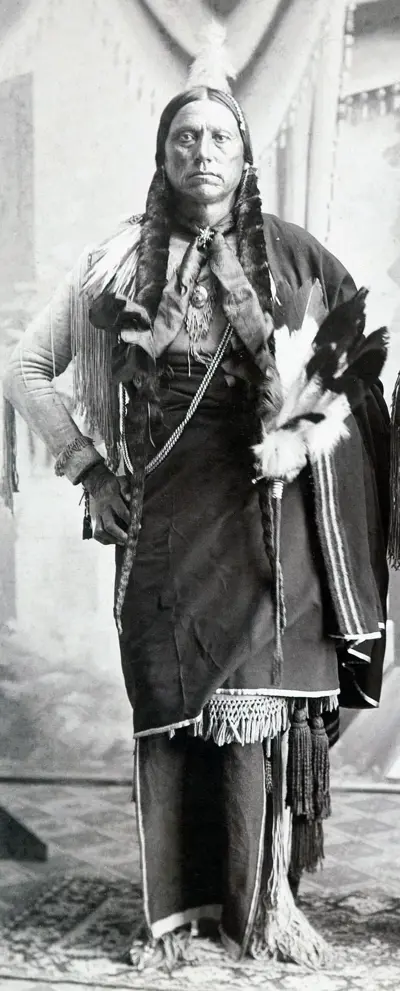
Quanah Parker (Comanche kwana, "smell, odor") was a war leader of the Kwahadi ("Antelope") band of the Comanche Nation. He was likely born into the Nokoni ("Wanderers") band of Tabby-nocca and grown up among the Kwahadis, the son of Kwahadi Comanche chief Peta Nocona and Cynthia Ann Parker, an Anglo-American who had been kidnapped as a child and assimilated into the Nokoni tribe. Following the apprehension of several Kiowa chiefs in 1871, Quanah Parker emerged as a dominant figure in the Red River War, clashing repeatedly with Colonel Ranald S. Mackenzie. With European-Americans hunting American bison, the Comanches' primary sustenance, into near extinction, Quanah Parker eventually surrendered and peaceably led the Kwahadi to the reservation at Fort Sill, Oklahoma.
