Lech Walesa Quotes
Technology helped end communism by bringing in information from the outside.


The president was surprised by the rapid spread and expansion of the anti-war movement at the time was convinced that the communists were organizing the effort. After all the investigations and histories, it was an extremely fast growing movement—perhaps the first of the digital political movements as e-mail was one of the tools used in the universities where e-mail was then coming into use.


who worked with the Communists. The Communists were to Flip-flop again when Russia needed arms and assistance to fight Hitler when the pact broke down. See {595773}


Kishi was an ultra conservative who was one of the politicians who signed the Declaration of War against the U. S. and then served in the Japanese War Cabinet and was the Minister of Commerce and Industry. In the latter post he presided over and made policies about the utilization of slave labor and brutal and illegal treatment of prisoners of war. After Japan’s surrender he was jailed as a “Class A” war crimes suspect along with several other cabinet ministers. In 1948, General MacArthur decided not to prosecute the Cabinet Ministers as he had decided not to prosecute the Emperor Hirohito. His brother was the secretary to the prime minister’s cabinet who had arranged a job for him. However, all the people in government were now building a democratic government. Being a right wing pro military, pro empire politician was no longer feasible and he discovered all his ex-colleagues who hated democracy before were now extolling its virtues. He went with the flow, and reorganized his political constituency, and gained control of the Diet, but now they were all democrats. Then he became prime minister. He was an ardent anti-communist and the Cold War was raging so his previous right wing dictatorial, pro war positions and his war crimes were overlooked by MacArthur and the allies.


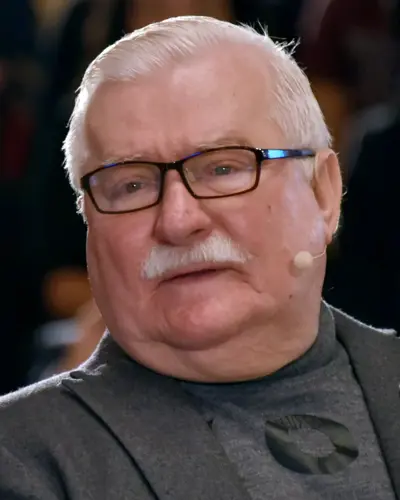
Lech Wałęsa is a Polish statesman, dissident, and Nobel Peace Prize laureate, who served as the first democratically elected president of Poland from 1990 to 1995. A shipyard electrician by trade, he became the leader of the Solidarity movement, and led a successful pro-democratic effort which in 1989 ended the Communist rule in Poland and ushered in the end of the Cold War.
