Daniel J. Mitchell Quotes
Taxes now consume more than 38% of the average family's budget … Compare this to the plight of medieval serfs. They only had to give the lord of the manor one-third of their output -- and they were considered slaves. So what does that make us?
Daniel J. Mitchell, Political Economist, The Washington Times, March 9, 1999
Sourced by: Eigen's Political and Historical Quotations


Commenting on the then proposed non-progressive, personal income tax:


He was responding to the Democratic Slogan, “You never had it so good.” Over 50 years later the Democrats would be lamenting the Republican administration of George W. Bush for the huge debt and the fighting of the war in Iraq. This quotation is an excellent illustration of the fact that the two American political parties “flip-flop” positions over time to accommodate whether they are governing or in opposition. By 2005, the Republicans were in support of high deficits as they had produced the largest debt in American History. In the 1950s, Republican doctrine was to condemn all government deficits. And Republicans were the party of peace and the democrats were more aggressive in foreign policy. 50 years later, it was the Democrats calling for an end to the fighting (Iraq) and the Republicans supporting the war. Over the same period, the other two issues, taxes and inflation are still republican issues.
On the suggestion that "sin taxes" on alcohol and tobacco be raised:


The George W. Bush administration when they had a Republican-controlled Congress, had amended the tax laws to treat the earnings of the hedge fund managers differently from people who manage other enterprises in the nation. They gave a group of very wealthy managers whose earnings were already amongst the highest of any managers in the country a huge tax break, while little public attention was paid to the subtlety of complex tax laws. Daschle and others began to draw public attention to the inequity.

An income tax had been instituted during the Civil War but had lapsed. Existing taxes were all excise or head taxes—very regressive. Later there was a political movement to bring back the income tax with the intention of taxing all income equally. There was a titanic struggle which culminated in a Constitutional Amendment allowing the income tax. None of the original politicians, for or against, the income tax could never imagine an income tax that would charge lower rates for investment income. That was the entire purpose of the income tax at the beginning—to tax investment (unearned) income. The “capital gains tax” was the creative way of the rich getting back some of what they thought the lost when the income tax was instituted.

Tax Evasion is a felony. Tax avoidance is using legal loopholes to avoid paying taxes. However, as Hightower points out, every time a wealthy individual or corporation legally avoids a tax, the burden to make up for the lost revenue falls on the Middle Class for whom there are few tax loopholes. Also, they cannot afford the high-priced lawyers and accountants to find the schemes to use.


There are a number of periods in American history when the highest marginal income tax rate for the very wealthy was over 90 percent. The highest marginal rate is not on total income but only on the excess above a threshold amount—based on 2010 dollars, the high rate would only be paid on the income OVER $3 million in that year. Reich was right in saying that some of the greatest growth spurts of the American economy occurred at times where the marginal tax rates were over 90 percent.


This became known as the Buffet Principle—that the very rich should not pay a lower tax rate than the workers who make far less money than they do. President Barack Obama used this principle by name in calling for the 2011 Jobs Act which would eliminate some of the loopholes and exemptions by which the rich could avoid some or much or their tax obligation.


The doctrine of the Southern Cotton industry before the Civil War was that Capital should not only use labor and control labor, but that in true capitalism, Capital should own labor—slavery. This Southern hostility towards labor rights and organized labor was derived from this extremist view of capitalism.
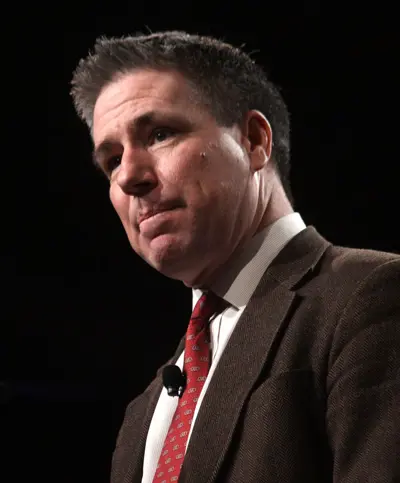
Daniel J. "Dan" Mitchell is a libertarian economist and former senior fellow at the Cato Institute. He is a proponent of the flat tax and tax competition, financial privacy, and fiscal sovereignty.
