Jean-Baptiste Say Quotes
Taxation being a burthen, must needs weigh lightest on each individual, when it bears upon all alike.
Say, Jean-Baptiste. A Treatise on Political Economy. Translated by C. R. Prinsep, Grigg & Elliot, 1836.


His principle was that if all men shared in paying taxes, no one would have to pay so much as to be impoverished. However, the tradition was to exempt so many citizens and classes of citizens that the burden fell heavily on the remainder. Today, in America, no one is exempted, but there are deductions and tax credits given so that some escape much taxation, the poor pay few taxes, and the burden still falls on some—today, the middle class.

Throughout most of the world, the rich and the aristocrats have been able to reduce or eliminate their tax obligations with the burden falling more heavily on the common people. Progressive taxation was thought to be a solution, but even in the United States by the 21st century many huge corporations paid little or no taxes while there was a heavy tax burden on small companies. Rich people generally paid a smaller percentage of their income than middle class people.


Describing the concept of an income tax:

Giovanni de Medici


As a result of years of lobbying many vested interests were getting tax exemptions for their activities. Some of the richest corporations and people paid little or no taxes. This was like the old European monarchies where the dukes and nobles got tax exemptions from the king and the middle class and poor people paid a much larger percentage of their income and wealth than did the nobility. Fairness in taxation is very difficult in practice. See {633629}

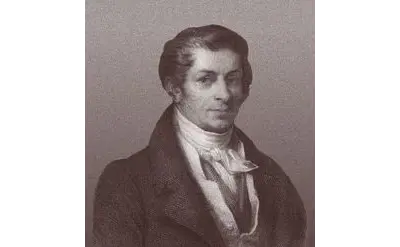
Jean-Baptiste Say was a liberal French economist and businessman who argued in favor of competition, free trade and lifting restraints on business. He is best known for Say's law—also known as the law of markets—which he popularized. Scholars disagree on the surprisingly subtle question of whether it was Say who first stated what is now called Say's law. Moreover, he was one of the first economists to study entrepreneurship and conceptualized entrepreneurs as organizers and leaders of the economy.
