Pankaj Mishra Quotes
Tanpinar presciently feared that to embrace the western conception of progress was to be mentally enslaved by a whole new epistemology, one that compartmentalised knowledge and concealed an instrumental view of human beings as no more than things to be manipulated.
Mishra, Pankaj. Introduction. The Time Regulation Institute, by Ahmet Hamdi Tanpinar, Penguin Classics, 2013.


Pandita Indrani Rampersad. She is the first Hindu woman who ever became a pundit—a religious expert who guides Hindus. She is also a professor in the United States.
The quotation is self explanatory except for the “curriculum” and “manliness.” The curriculum refers to the Saudi Arabian fundamentalist Wahabi educational curriculum that has been sent all over the world, including the U. S. These tech hatred and violence. America and most non Islamic countries have put great pressure on Islamic groups not to use these extremist materials. To Kharabshe, this in itself is a sin because he sees this curriculum as the authentic and proper one. See {606337} for an example of the violence in the curriculum. He and many like him believe that the attempts by Western nations to provide any rights for women beyond what they have under the Koran diminishes the manliness of Islamic men who would become the victim of these females who would not be under proper control of the men.
The Jews and Arabs for years shared Palestine. But the Jews spread out over the world, becoming modern and Westernized in the process. When the Jews returned to Palestine as a part of the Zionist movement, they were more modern, Westernized, and culturally at odds with their old Arab cousins, whose cultures had atrophied. The Arabs resented the Westernized culture that was being introduced into the Middle East. One point of view is that had Israel not tried to introduce moderism and Western ideas into the Middle East, the Jewish State might have been more accepted. However, not only did they bring a foreign perspective (democracy), education and techmology and capitalism to the area, but they far outpassed the Arab nations in agriculture, industry, science, medicine and general standard of living. The Arab dictators and monarchs had always had the excuse for poverty that the land was so poor that it simply could not be developed, but Israel developed the worst of the land in the area with no oil or natural resources. Every day of Israeli prosperity and scientific achievement was an embarassment for the rest of the Middle East where even the rich oil countries were not improving the lot of the average citizen.


“Young Chinese” referred to members of a Chinese political party—Young China—consisting mainly of Western-Educated young Chinese who were a strong force for change, but did not have the experience, money, or power connections to unify the country or operate the government. The Japanese watched Chinese politics very carefully as China was seen as a potential rival or a teritory of conquest.
Buleihi is one of the few Arab intellectuals who are not totally negative about Western colonialism and interference in the affairs of other countries who he believes benefit from the Western influence and have developed such an insularity that they will not be changed or modernized otherwise.


Most Muslims in the world prefer a Western modern lifestyle to their traditional culture. The Islamic fundamentalist leaders however see evil and the dissolution of their traditions in this process of modernization and try and polarize their communities to intimidate the modernists. The same thing happened in Christianity over the last centuries and the modernists prevailed, but even in America there are still religious fundamentalists (Christians and Jews) who reject and oppose modernism. The difference is that in America, the anti-modernists are relatively few and not nationally influential on public officials while in many Islamic nations, they are numerous and very influential on public officials. The American religious fundamentalists have already lost in trying to stave off modernity; in many Islamic nations the contest is still in doubt.


In 1898 the President was faced with a great dilemma in the Philippines. Giving the islands back to Spain after the war was unthinkable. Germany and France were waiting to step in. Self government was viewed as impractical, given the state of affairs at the time. The President decided to take the islands.
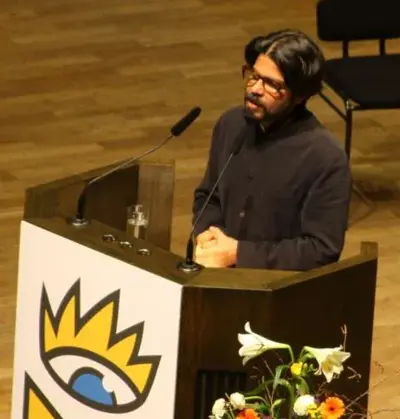
Pankaj Mishra is an Indian essayist and novelist and a recipient of the 2014 Windham–Campbell Prize for non-fiction.
