Murray Bookchin Quotes
Take a very striking case in point: the Russian Bolsheviks. [Vladimir] Lenin created an alleged workers' party, which in every way reflected the Czarist machine, in order to deal with Czarism. And the danger and the hazards of trying to accommodate libertarian principles to the political process as we know it today is that one begins to dissolve the libertarian principles. So I would say that there is an inconsistency there that should be explored.
Bookchin, Murray. "Interview with Murray Bookchin." Reason, Oct. 1979.

While Lenin was admired for his skill by his revolutionary colleagues, many had their concerns.


Commenting on political parties in Cuba:

Lenin, Uritsky, and other Bolshevik leaders were attacked in 1918. Lenin was wounded but Utrtsky died, and this triggered the attacks on the other Russian factions by the Bolsheviks known as the “Red Terror.”

After the Russian Revolution in 1917, there was a vicious civil war and the Communists governed ruthlessly not even pretending to follow the democratic principles that they had espoused before they can to power. This was a typical intellectual rationalization of a dictatorial behavior that lasted until the fall of Communist Russia. However, at this time most supporters thought that things would soon change. They only got worse culminating in Stalin’s atrocities. The Bolsheviks were the ruling communist party in Russia.

1st Earl Lloyd-George of Dwyfor. This turned out to be one of the worst predictions in political history.


Only 6 years after the Russian Revolution Lenin was already being perceived as an international provocateur and instigator of problems.


Hayek uses this line to explain that fascism may emerge when communism—or belief in its promise—fails, as seen in Stalinist Russia and pre‑Hitler Germany.

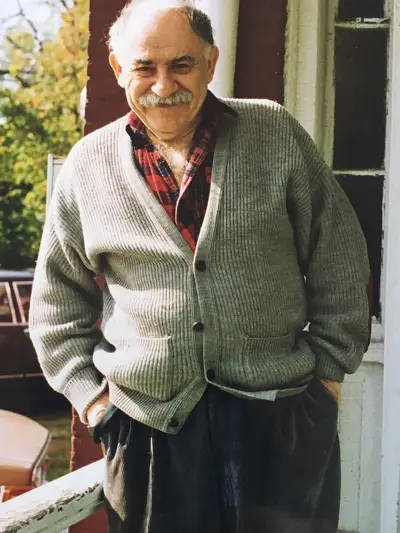
Murray Bookchin was an American anarchist, political philosopher, trade-union organizer, and educator. A pioneer in the environmental movement, Bookchin formulated and developed the theory of social ecology and urban planning, within anarchist, libertarian socialist, and ecological thought. He was the author of two dozen books covering topics in politics, philosophy, history, urban affairs, and social ecology. Among the most important were Our Synthetic Environment (1962), Post-Scarcity Anarchism (1971), The Ecology of Freedom (1982) and Urbanization Without Cities (1987). In the late 1990s, he became disenchanted with what he saw as an increasingly apolitical "lifestylism" of the contemporary anarchist movement, stopped referring to himself as an anarchist, and founded his own libertarian socialist ideology called communalism, which seeks to reconcile Marxist and anarchist thought.
