Robert G. Ingersoll Quotes
Suppose, however, that God did give this law to the Jews, and did tell them that whenever a man preached a heresy, or proposed to worship any other God that they should kill him; and suppose that afterward this same God took upon himself flesh, and came to this very chosen people and taught a different religion, and that thereupon the Jews crucified him; I ask you, did he not reap exactly what he had sown? What right would this god have to complain of a crucifixion suffered in accordance with his own command?
Ingersoll, Robert G. "Heretics and Heresies." The Works of Robert G. Ingersoll, vol. 1, Dresden Publishing Co., 1902, p. 238.

This is the justification that some Muslims use for the murder of prisoners of war if the war is perceived to be an attack on Allah. This for most includes Westerners.

For many extremists Muslims, this sura calls for the torture or killing of the enemies of Islam. For the more moderate Muslims, the penalty of opposing Islam should be expulsion or banishment. The further modern complication of this sura is the definition of “making war with Allah.” To some extremists, it is writing or publishing anything contrary to their view of Islam; it is occupying any Islamic nation or warring with that nation even though the basis of the war might have nothing to do with religion; it is bringing a Bible into an Islamic nations; it is allowing alcohol to be sold and served; it is opposing their discriminatory customs and laws; it is pressuring them not to stone adulteresses.


Trosch a radical right winger argued that Pope Paul should be removed from office for opposing capital punishment and a number of other “offenses.”
The Prophet Muhammad when he was the spiritual and civil leader never called for the death of anyone who insulted him. This is strictly a mania of extremist followers of Islam. However, it should be kept in mind that the Roman Catholic Church in its history murdered people for insulting the Pope or Jesus. It all stems from the Old Testament call for the execution of heretics and blasphemers.
He had whipped the crowd up into a feverish pitch until someone rushed the bound and tied blacksmith and stabbed him to death. He had only criticized Mathias for being too harsh and stern a leader.


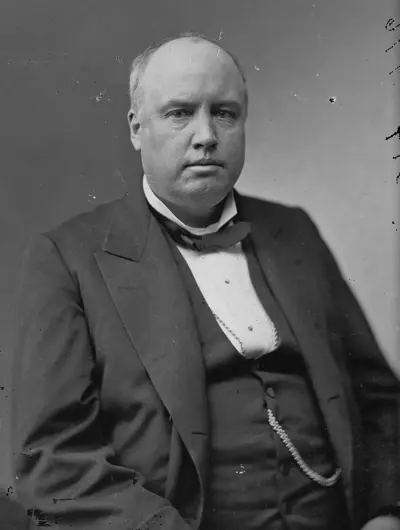
Robert Green "Bob" Ingersoll was an American lawyer, a Civil War veteran, political leader, and orator of the United States during the Golden Age of Free Thought, noted for his broad range of culture and his defense of agnosticism. He was nicknamed "The Great Agnostic". Ingersoll was considered to be the greatest orator and political thinker of his day, but his overt atheistic views curtailed his elected political career.
