Umberto Eco Quotes
But why do some people support [the heretics]?" "Because it serves their purposes, which concern the faith rarely, and more often the conquest of power." "Is that why the church of Rome accuses all its adversaries of heresy?" "That is why, and that is also why it recognizes as orthodoxy any heresy it can bring back under its own control or must accept because the heresy has become too strong.
Eco, Umberto. The Name of the Rose. Harcourt Brace Jovanovich, 1983.


This edict gave great support to the Inquisitors of all Catholic countries. See {617572}

This notice of Excommunication was promulgated to the Catholic clergy in Ireland in May of 1538. It required all Roman Catholic leaders to size the property of Protestants or Catholics who sympathized with them. Those who did were then regarded as traitors by the Protestant King. The anti-Protestant feeling culminated with the massacre of about 100 Protestants who were drowned in Bann a few years later.

Admiral Coligny was a leading French Protestant. He was murdered along with 50,000 Protestants by the French Catholics in what has come to be known as Massacre of Saint Bartholomew. Earlier in his career Pius V had been the an inquisitor or the Inquisition and was appointed “Inquisitor General For All Christendom,” so he had an anti-Protestant background. Incredibly enough, he was beatified and canonized a saint despite—some say because of—his participation in and encouragement murders of non-Catholics and even Catholics who happened to dissent on some aspect of theology. It is not clear whether the Pope knew in advance of the planned massacre or whether he or his representatives had any part in the planning of it. Since the end of the Second World War, Popes have been in the forefront of protest and moral condemnation of religious or ethnic atrocities, and it is hard for most of us to conceive that a Pope could countenance the murder of 50,000 souls by his faithful followers.

This is a particularly interesting historical quotation because it succinctly gives a history of the various horrors of religious strife in British history—a history that was very well known to the American Founding Fathers and the general American Colonial population. This history was the major driver behind the public insistence for the Bill of Rights and the 1st Amendment which erected a wall of separation between church and state with government never favoring or abetting any particular religion.


Spinoza’s ideas were considered so radical and dangerous that he was the only man in history who was excommunicated by the Catholics, the Jews and the Muslims. This was his observation after his first excommunications -- by his Jewish Congregation in Amsterdam.


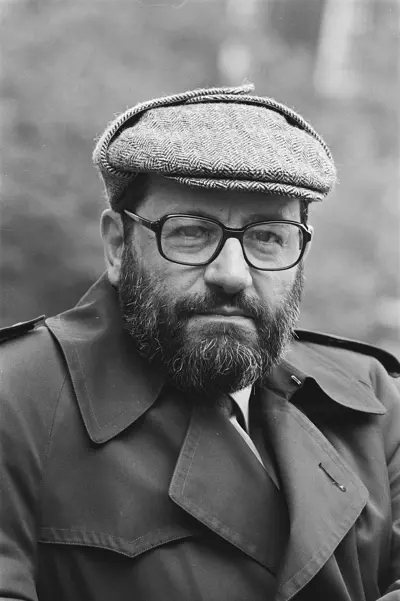
Umberto Eco OMRI was an Italian medievalist, philosopher, semiotician, cultural critic, political and social commentator, and novelist. In English, he is best known for his popular 1980 novel The Name of the Rose, a historical mystery combining semiotics in fiction with biblical analysis, medieval studies, and literary theory, and Foucault's Pendulum, his 1988 novel which touches on similar themes.
