Adam Smith Quotes
Sugar, rum and tobacco are commodities which are nowhere necessaries of life, which are become objects of almost universal consumption, and which are therefore extremely proper subjects of taxation.
Smith, Adam. An Inquiry into the Nature and Causes of the Wealth of Nations. Vol. 2, W. Strahan and T. Cadell, 1776, p. 488.


As opposed to having tax collectors within the United States. At the time, import duties were the only taxes Jefferson approved of.


Napoleon was referring to vices like alcohol, opium, and tobacco which could be taxed heavily with much support of many citizens. This could finance the nation. That was the logic of the quote.

This historical quotation is surprising to us over a century later. We are surprised at the very large revenue from the then relatively low tax rates on alcohol and tobacco and many people who did not pay their taxes at the time. Also, the incredibly small appropriation for the military. WWI was only 4 years away. Generally, until the Second World War, the Democratic party did not advocate large military expenditures and the Republicans were more isolationist and opposed almost all defense spending. After WWII, the Republican Party flip flopped and became the champion of military readiness and defense spending.
See {634234} and {634238} for more of his arguments at the Ratification Convention.


The patriot legal position did shift over time. Like many grass roots political movements, the Americans had morality and justice on their side and did not think through the implications of their arguments when they opposed the Stamp Act. After the Revolution Leonard had to leave and he went to English Bermuda where he was rewarded for his loyalty with the position of Chief Justice.

The American colonists were not allowed to sell their tobacco or other products to foreign nations. They could only sell them to English merchants who in turn would sell them to foreign markets. Thus, the large profits on American tobacco were made by English merchants and not by American farmers or merchants.

The King was always taxing the middle class and the peasants and was extremely unpopular just before the French Revolution. She made some suggestions for taxes that could be levied on the rich. Just as today in America, many of the wealthiest people paid little or no tax, and had the power to pressure the king and the parliament should one ever be debated.

In this case the tariffs were imposed not to protect national industries but to simply raise revenue. In the early years of the United States, almost all of the Federal Revenue was raised this way.

Most Republicans at the time were beholden to corporations and business who then demanded high tariffs and other protectionisms so they could maintain high prices and not have to compete with British and European imports. Roosevelt and a few other reform Republicans were free traders along with most Democrats. Roosevelt had so many other reforms in the fire that he decided not to take this one on at the same time and thought that the benefit would not be good enough for the nation to offset the open civil war of the Republican Party that would ensue. In the latter half of the 20th century, large American companies had opened or invested in foreign corporations and/or were manufacturing many of their products abroad. So they then advocated free trade. When they did, the Republican Party flip flopped and adopted free trade as one of its basic principles. Meanwhile, the Democrats who were free traders in the early 20th Century had become protectionists by the end of the 20th century as labor movement wanted to protect American jobs.


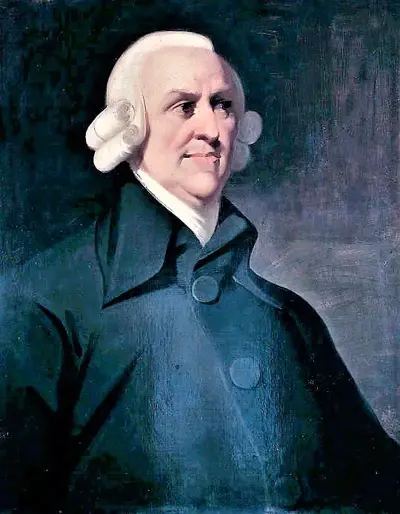
Adam Smith FRSA was a Scottish economist, philosopher as well as a moral philosopher, a pioneer of political economy, and a key figure during the Scottish Enlightenment, also known as ''The Father of Economics'' or ''The Father of Capitalism''. Smith wrote two classic works, The Theory of Moral Sentiments (1759) and An Inquiry into the Nature and Causes of the Wealth of Nations (1776). The latter, often abbreviated as The Wealth of Nations, is considered his magnum opus and the first modern work of economics. In his work, Adam Smith introduced his theory of absolute advantage.
