Sanjaya Baru Quotes
Strategic autonomy is not secured by merely asserting one's independence: it is secured by creating mutually beneficial interdependencies.
Baru, Sanjaya. Strategic Consequences of India's Economic Performance. Academic Foundation, 2006.


Inscribed in the John Adams Building of the Library of Congress. On this subject Jefferson was in agreement with George Washington {37176} and his political opponent, John Adams {592705}.

Spinoza was one of the most feared intellectuals in human history—feared that is by the established power structures. He is the only known person who was excommunicated by the Catholics, the Jews and the Muslims. He was the enemy of authority and advocated personal reason as the guide for men.


Those environmentalists who take this view do not give credence to other alternatives. For example, the same argument of environmental decision-making could logically justify one superpower nation taking over the government of all others on the planet for environmental matters. Another possibility is that the existing mechanisms and the UN are sufficient if the major powers reach agreement. Another is that science and technology will provide solutions.


The US Congress passed the Magnitsky Act which allowed parties to sue in American Courts, Russian companies and individual wrongs committed against Russian Citizens in Russia. (The Russian prison system controlled by some corrupt powers in Russia had killed Magnitsky for exposing some massive corruption of some Russian officials. Although morally justified, legally the act was an interference in another nation’s internal affairs.) The Russians then banned the adoptions which actually hurt them far more than the U. S., but it was a retaliation which to maintain their dignity and sovereignty the Russians felt was necessary. It is an excellent example of the lack of predictability and reaction to various foreign policy moves. Retaliation could take any form, related or not, proportional or not, rational or not.
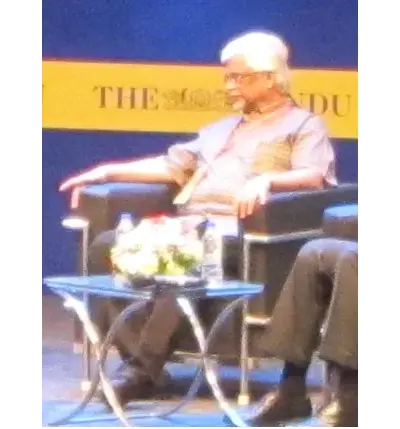
Sanjaya Baru is a political commentator and policy analyst. He served as Secretary General of the Federation of Indian Chambers of Commerce and Industry from May 2004 until August 2008. He has also served as associate editor at The Economic Times and The Times of India, and then chief editor at Business Standard. His father B. P. R. Vithal was Finance and Planning Secretary during Dr. Manmohan Singh's tenure as Secretary of Finance in the Government of India.
