Denis Healey Quotes
Squeeze property speculators until the pips squeak.


Vladimir Lenin. Terrorism has been an instrument of dictatorial states in general and most revolutions. Speculators as used by Lenin at this time were not just businessmen or capitalists. They were people who bought up and hoarded scarce resources and food, waiting for worse shortage, and then selling their food or other goods at very high prices. Or they would take advantage of the fact that farmers did not have enough to eat and only give them food if why would sign over their land rights. Soon honest businessmen were treated like speculators because they made people less dependent on the party and the government. Stalin, who followed Lenin was even more extreme and had speculators, businessmen and landowners executed.

To the modern reader utterances such as this from a Conservative Prime Minister seem astounding. However, the Great Depression existed in Canada as well as the United States, and Franklin Delano Roosevelt was not the only world leader who would reach the conclusion that business and capitalism must be profoundly regulated and the system changed if it was to be saved.


If there would be free competition in banking as opposed to monopolies in each area, This is the first major history of banks written in the United States. At the time, there was hardly any competition amongst banks. Each bank had a do facto or official monopoly in its area. In many communities of America, this is still true, but competition in banking has reached almost all high density areas of the country.

Most companies in a capitalistic system compete mightily to obtain monopolistic positions so they can avoid capitalistic competition thereafter.

Hoover was the Food Administrator at that time. Although he gave lip service to the free market economy concept, he was proposing government price controls and rationing. When the free market was not functioning, at this time in his career, he was willing to use government controls and regulation. By the end of 1918 over 250,000 food-handling corporations, firms, and individuals were under Food Administration licenses. Meat, fish, poultry, eggs, butter, milk, potatoes, fresh and dried vegetables, and fruits, canned goods, the coarse grains and rice, vegetable oils, coffee, and such various commodities accessory to food-handling, as ice, ammonia (for ice-making), arsenic (for insecticides), jute bags, sisal, etc., were under direct control. Ironically, later when he was President and faced with the Great Depression, he had become much more rigid and would not “interfere” with the free, private market and use government to solve the national problems. It was Franklin Delano Roosevelt who did that after Hoover would not. At the time he gave this speech, Hoover was not very political and was more of a technocrat. It may have been that by the time he became President he was intellectually and politically locked in to Republican Party conservative economic ideology.

At the time, the financial industry spent more money for lobbyists and campaign contributions than any other sector of the economy. The result is that they had extraordinary access to and influence upon members of Congress and their staffs, that more often than not, the actually drafted the language for laws, amendments and regulations and then les the strategy to pass the legislation or finalize the rule. Moreso than any other industry, they wrote their own rules. Even after the Meltdown of 2008 and the Great Recession where there was a public outcry for reform, the Dodd Frank legislation was influenced by the industry and after passage most of the rules and interpretations were written by the industry or greatly influenced by them.


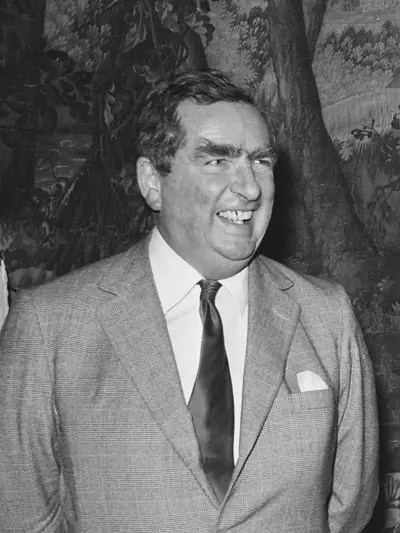
Denis Winston Healey, Baron Healey CH, MBE, PC, FRSL was a British Labour Party politician who served as Chancellor of the Exchequer from 1974 to 1979 and as Secretary of State for Defence from 1964 to 1970; he remains the longest-serving Defence Secretary to date. He was a Member of Parliament from 1952 to 1992, and was Deputy Leader of the Labour Party from 1980 to 1983. To the public at large, Healey became well known for his bushy eyebrows, his avuncular manner and his creative turns of phrase.
