Miroslav Volf Quotes
Some of the worst violence in the world today between estranged religious and ethnic groups happens not on the battlefields. It happens smack in the middle of living rooms and between people who share a lot, who have a lot in common.
Volf, Miroslav. Exclusion and Embrace: A Theological Exploration of Identity, Otherness, and Reconciliation. Abingdon Press, 1996.

The report was praised by some of the intellectuals of Pakistan and most of the non-Islamic world. However, Pakistan the discussion of each of the cleavages, instigated the public passion of the cleavage and nothing significant was done.

The amazing thing about this quotation of 1913 is that at the end of the 20th century the Christians were again at the Muslims throats and Bosnian Muslims were being murdered and ethnically cleansed by the Roman Catholics of Croatia and the Eastern Orthodox Christians of Serbia. The hatred had persisted—the legacy of 1000 years before.

Sirhindi is a very important Muslim Imam and is credited with breathing new life and energy into the 2nd millennium of Islam. An irony of this quotation is that Sufi’s are often characterized as “moderate” Muslims. The quotation is extremely important in that there are some who attribute the anti-Semitism of the Muslims to the dispute over the State of Israel. However, it was the anti-Semitism that caused the problems with Israel. This quotation is from the 17th century—more than 300 years before Israel was established and over 200 years before the Zionist movement even thought about recovering Palestine for the Jews. Islamic anti-Semitism and anti-Christianity began in the Prophet’s lifetime and continued thereafter. It is as vicious today as it was 500 years ago, except for the fact that there is now an Islamic Reformation that despite the Koran’s statements regarding non-believers, they have a more modern view of the world and the people within it. Islamic cultures like Indonesia and Turkey do not have the same degree of anti-Semitism as Pakistan and the Arab Countries.


Througout political history, including in America, opportunistic, unscruplous politicians have appealed to the prejudices and hates of subsets of the population for others (usually minorities) to get elected or obtain support for legislation and administrative action. In America this has been an element of all populist movements—an enemy. This quote is particularly enlightening in that it shows that the real need is to have a minority to focus the public against—which one is not as material as the fact that there is one.
Ariel Sharon, before he became Israeli Prime Minister was an Army General, who led the attack on the Palestinian PLO terrorists in Southern Lebanon. He had made an alliance with the Lebanese Christian Phalangists who had been brutalized and many had been murdered by the PLO militants who operated out of the Sabra and Shatila Beirut refugee camps where the terrorists had a safe haven and their PLO headquarters in Shatila. Israeli troops under Sharon had reached Beirut, and then the Phalangists attacked the two refugee camps where they had scores to settle and sought revenge. Somewhere between 700 and 3500 Palestinians were killed. Most of them were civilians (according to the Palestinians) or terrorist fighters (according to the Phalangists). Sharon was faulted by many for the deaths; these critics observe that Sharon, as the victorious military power in the area was responsible according to the rules of war for the safety of all civilians in the area. He commanded the strongest military in the area and he allowed or did not stop the Phalangists who were exacting their revenge. Therefore some accused him of war crimes. There was also an Italian military peacekeeping contingent in the camps but they chose not to intervene.


Vladimir Lenin. Despite Lenin’s abhorrence of anti-Semitism, there were any other Russians for whom it was normal. After Lenin’s death, Stalin and his henchmen used anti-Semitism to divert attention from the Communist Party’s failure to meet its economic and other goals.

The hatred of the right wing Croats and Serbs is so great for each other, that these two Christian groups find it hard fo have any sort of communication and accommodation of each others. In addition to the traditional religious enmity, during WWII, the Croats were Nazi Allies and created and ran a concentration camp where Serbs were killed and abused.


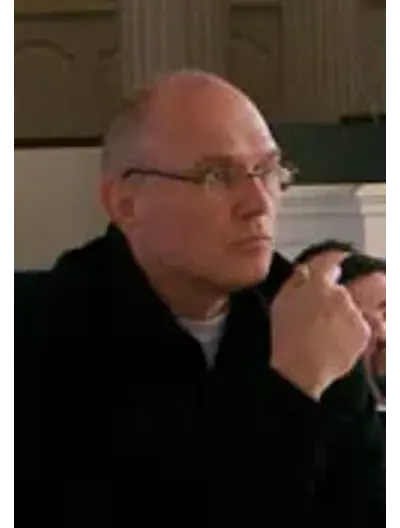
Miroslav Volf is a Croatian Protestant theologian and public intellectual and Henry B. Wright Professor of Theology and Director of the Yale Center for Faith and Culture at Yale University. He previously taught at the Evangelical Theological Seminary in his native Osijek, Croatia (1979–80, 1983–90) and Fuller Theological Seminary in Pasadena, California (1990–1998).
