Ralph E. Flanders Quotes
Some of the finest speeches in the Senate Record have been delivered to a scattering half-dozen of listeners. Nine-tenths of the verbal proceedings are "for the record" rather than with any expectation of changing votes. Yet the most important of the speeches "for the record" have their effect on public opinion, when reported in the press ... or when distributed as reprints.
Ralph E. Flanders, 1880-1970, U.S. Senator (Republican, VT), Autobiography
Sourced by: Eigen's Political and Historical Quotations


See {584897} for a quotation from the speech. Spinning and giving advance copies of speeches to the press is not the invention of the 20th century media-savvy political handlers. It was a standard practice even in the 19th century.


TR was the first American President to speak in front of the sound motion picture cameras. He was so conscious of this new technology that the timed his speeches and marked major pauses to allow for the cameramen to change rolls of film.


The reference was to President Ulysses S. Grant’s message to Congress which was particularly candid, substantive, and specific.


TR worked very hard for his press coverage. He literally met with the press every day—often several times. Daily, his barber had to cut and shave with the President talking to the reporters and answering questions. The only time he stopped talking was when the barber was shaving his chin or upper lip.
The Democrat campaign operators, led by Robert Woolley, for the first time in an American Presidential campaign, used all the new techniques of public relations and advertising that had been developed. Many observers like the New Republic editors saw this in a negative light for American democracy. They wanted the old method where people met the candidates and had discussions with candidates or heard from others who had. It was in retrospect an editorial of nostalgia, as the country was growing so much that voter “acquaintance” with Presidential candidates was becoming more and more difficult.


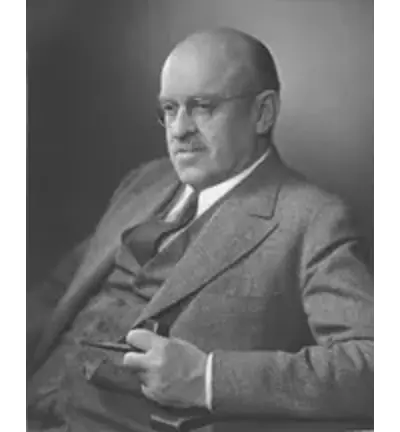
Ralph Edward Flanders was an American mechanical engineer, industrialist and politician who served as a Republican U.S. Senator from the state of Vermont. He grew up on subsistence farms in Vermont and Rhode Island and was an apprentice machinist and draftsman before training as a mechanical engineer. He spent five years in New York City as an editor for a machine tool magazine. After moving back to Vermont, he managed and then became president of a successful machine tool company. Flanders used his experience as an industrialist to advise state and national commissions in Vermont, New England and Washington, D.C. on industrial and economic policy. He was president of the Boston Federal Reserve Bank for two years before being elected U.S. Senator from Vermont.
