Henry D. Sokolski Quotes
Some Japanese officials are already mulling over the idea of developing long-range missiles for possible preemptive strikes against North Korea. And South Korea has been developing longer range missiles that can not only hit all of North Korea, but parts of China. “Meanwhile, both Japan and China are planning to open up massive reprocessing plants that could make one to 2,000 nuclear weapons worth of plutonium a year, even though there is no economic justification for opening such plants -- they're enormous money losers. And, of course, South Korea doesn't want to be left behind -- hawkish politicians there keep voicing a desire to develop an option to go nuclear. All this is a prescription for mischief and, if it’s not arrested, will end in a vale of tears.
Henry D. Sokolski, Global Briefing, March 2017
Sourced by: Eigen's Political and Historical Quotations


This rhetoric turned out to be just that. When Israel developed a nuclear capability, the Egyptians became more rational and sobered. It was Anwar Sedate however who was the Egyptian leader wise enough and strong enough to make peace with Israel.


1st Earl Mountbatten of Burma


There had been so much nuclear activity—military and civilian—that he thought it inevitable, either by intention or accident, that there would be some catastrophes. Chernobyl and the crash of a nuclear bomb equipped plane in Spain destroyed the two areas for years thereafter proved him prescient but fortunately none of the “incidents” were bad enough to affect millions of people significantly although the damage of Chernobyl is still being discovered.


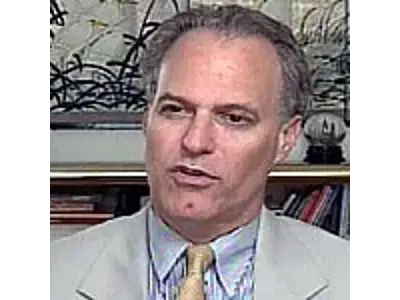
Henry D. Sokolski is the Executive Director of the Nonproliferation Policy Education Center, a Washington-based nonprofit organization founded in 1994 to promote a better understanding of strategic weapons proliferation issues among policymakers, scholars, and the media. He teaches as an adjunct professor at The Institute of World Politics in Washington, D.C. and at the University of Utah and has an appointment as Senior Fellow for Nuclear Security Studies at the University of California at San Diego, School of Global Policy and Strategy.
