William Howard Taft Quotes
Socialism proposes no adequate substitute for the motive of enlightened selfishness that to-day is at the basis of all human labor and effort, enterprise and new activity.
William Howard Taft, 1857-1930, 27th President of the United States (Republican, OH), Chief Justice of the U. S. Supreme Court, Popular Government: Its Essence, Its Permanence and Its Perils, 1913
Sourced by: Eigen's Political and Historical Quotations


Many anti-socialists criticize the political philosophy of socialism on the grounds that it denies citizens personal freedom. Yet most socialists claim that a central doctrine is to give citizens more freedom. The difference is in the type of freedom that they each emphasize. Most socialists observe that the major limits to the freedom of the vast majority of the people in the world are put there by the lack of economic resources. So increasing freedom to them is to decrease the de facto limits that are placed on people by the economic system. The person working for a large corporation that is a monopoly or the only employer in the area, and has a family and no saved money to move to another area, has no freedom to live where he would like. So the socialists emphasize getting the person more money and diminishing the power and the options of the employers to de facto restrict the corporations and businesses. The capitalists look at socialism and see a system that would diminish the freedom of the corporations and those people who own and manage them and argue that if they are successful enough the workers will fare better and be able to gather and save the resources that they might need to move, change careers and have more de facto freedoms." Viscount Prestwood


This book became the basic English textbook on socialism. Astoundingly, it sold over 2 million copies at a time when few books other than the Bible ever sold in that quantity. The fact that it was so popular alarmed many of the more conservative politicians of the day.


The revolutionists had just captured the Winter Palace: Vladimir Lenin

This was the basic document issued after the Russian Revolution establishing the basic legal and economic structure of the new Soviet State.


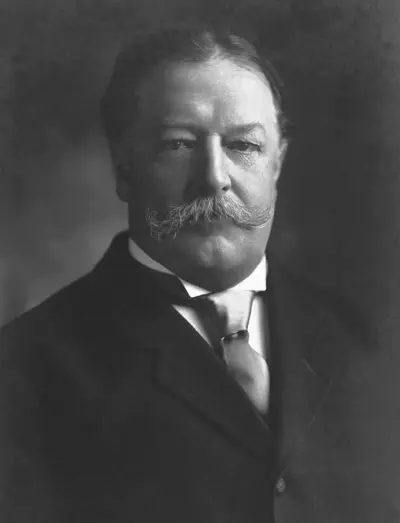
William Howard Taft was the 27th president of the United States (1909–1913) and the tenth Chief Justice of the United States (1921–1930), the only person to have held both offices. Taft was elected president in 1908, the chosen successor of Theodore Roosevelt, but was defeated for reelection by Woodrow Wilson in 1912 after Roosevelt split the Republican vote by running as a third-party candidate. In 1921, President Warren G. Harding appointed Taft to be chief justice, a position he held until a month before his death.
