Albert Camus Quotes
So the thing that bothered me most was that the condemned man had to hope the machine would work the first time.
Camus, Albert. The Stranger. Translated by Matthew Ward, Vintage Books, 1989, p. 111.


Recalling what the Oklahoma state medical examiner told him about electrocutions.

Joseph-Ignace Guillotin was not thye inventor or the execution machine that bears his name. The actual inventor of the prototype was Antoine Louis. However, Guillotin--a physician by training was very concerned that a very high percentage of beheadings were botched by the executioner and the victim suffered greatly. He became the public and political advocate for the reform of the mode of execution in France to reduce suffering. The device ended up with his name as the noun to describe it. In this quotation, he made his first majhor speech to his fellows of the French Chamber of Deputies in 1791. Prior to the Frech Revolution beheading was the method of execution reserved for the Nobility & Aristocracy. They couod pay the executioner a "fee" to be sure that his sword or ax was sharp and that he/she would not suffer much. Nonetheless, many executions were botched. After the Revolution giving ALL citizens the same royal execution if they were convicted felons. So its adoption was a revolutionay act and philosophically based.

Kozinski was a supporter of captial punishment, but beileved it important that society was very slear about what it was doing. Executing a man is a very brutal process, and shen society determines that it is necessary, it shoud face the fact and the reality of the decision it is making. Hence he favored public executions


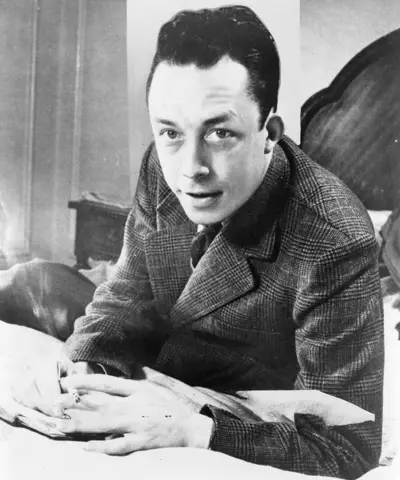
Albert Camus was a French philosopher, author, and journalist. He won the Nobel Prize in Literature at the age of 44 in 1957, the second-youngest recipient in history. His works include The Stranger, The Plague, The Myth of Sisyphus, The Fall, and The Rebel.
