Charlton Heston Quotes
So that this nation may long endure, I urge you to follow in the hallowed footsteps of the great disobedience of history that freed exiles, founded religions, defeated tyrants, and yes, in the hands of an aroused rabble in arms and a few great men
Heston, Charlton. "Winning the Cultural War." Address at the Harvard Law School Forum, 16 Feb. 1999, Cambridge, MA.


Writing about congressional investigations such as those carried out by the House Un-American Activities Committee:


The veiled threat of violence and disruption was a tactic that did not work.


His assumption about whether an army was “willing or able to train its guns on inoffensive people” was a little naïve. The Ottomans had massacred the Armenians, and soon the German troops would murder innocent civilians. As did the Japanese. The Russian Communists on many occasions massacred civilians engaging in passive resistance. In Cambodia, the Kmer Rouge Army killed almost 2 million, most of whom had educations which might have made them passive resisters. Islamic Fascist governments like Syria and Iran used heavy weapons to kill citizens in their own homes because they were in neighborhoods that housed many passive resisters. Extreme Islamic Fundamentalist Terrorists regularly killed innocent civilians in their homes, on the streets or in busses, just to intimidate others to surrender to their religious and political demands. He was right that democratic governments and armies would not engage in such killing of their own people, but there are unfortunately still many other governments.


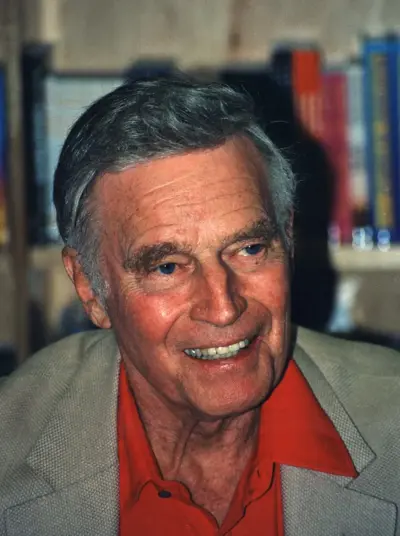
Charlton Heston was an American actor and political activist. As a Hollywood star, he appeared in almost 100 films over the course of 60 years. He played Moses in the epic film The Ten Commandments (1956), for which he received his first nomination for the Golden Globe Award for Best Actor – Motion Picture Drama. He also starred in The Greatest Show on Earth (1952), Secret of the Incas (1954), Touch of Evil (1958) with Orson Welles, The Big Country (1958), Ben-Hur (1959), for which he won the Oscar for Best Actor, El Cid (1961), The Greatest Story Ever Told (1965), Planet of the Apes (1968), The Omega Man (1971) and Soylent Green (1973).
