Cornel West Quotes
So much has to do with going beyond treating black people as cosmetic and symbolic items, as opposed to genuine personalities and human beings. And that is a deep moral and spiritual issue, which can of course be backed up by Civil Rights Commissions which enforce the laws against any form of discrimination.
West, Cornel. Race Matters. Beacon Press, 1993.


Humphrey was the Mayor of Minneapolis then.


This was the first major civil rights speech. He had previously in his political career tread carefully in the civil rights arena. The Southerners had disproportionate control over the Congressional committee chairmanships and they could hold up his entire legislative agenda. JFK’s father was a right wing fascist who supported Hitler earlier and always advised against pushing civil rights.

This is a particularly memorable quotation for several reasons. First the address was given by a young senior student who would later be a member of Congress, a effective abolitionist, and the author of various pieces of legislation that vexed the South. What is even more memorable is that the oration was given at an Ivy League College Official Graduation. The Ivy league schools, despite their reputation for intellectual freedom, generally were very adverse to any discussion about the slavery issue as it would cause too much passionate contention. See {621346} for an example at Harvard. In addition, Brown University was in Providence RI, where the economy depended in substantial part on slavery. The Co-Founder of Brown was himself a slave trader {622028}. This was one of the early American anti-slavery orations.


The reason this quotation is important, it was the first time in American history that a President had tied racial discrimination to morality. Before that other Presidents had argued against segregation on pragmatic grounds or on legal, Constitutional grounds. Kennedy’s private moral declaration had a huge impact on Black leaders throughout the country who heard about it by word of mouth. That statement forged a bond between JFK and Blacks while most whites did not see anything striking in the statement.


In the 1930s African Americans who traveled were subject to countless humiliations whenever the sought hotels, rooming houses, restaurants and other accommodations. Gas stations would not allow them to use bathrooms and they were reduced to using open fields. Traveling and vacationing was, for Blacks, humiliating. Wikipedia: “Green reviewed hotels and restaurants that did business with African Americans during the time of Jim Crow laws and racial segregation in the United States. He printed 15,000 copies each year. In the 1930s, Green began his work by compiling data on stores in the New York area that accepted black travelers, and published his first guide in 1936. Similar guides had been published for Jewish travelers, who sometimes faced discrimination. Green's guide was so popular that he immediately began to expand its coverage the next year to other US destinations, adding hotel and restaurants as well.”

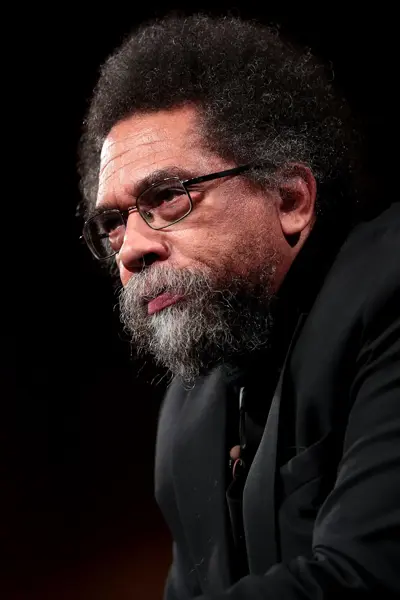
Cornel Ronald West is an American philosopher, political activist, social critic, and public intellectual. The grandson of a Baptist minister, West focuses on the role of race, gender, and class in American society and the means by which people act and react to their "radical conditionedness." A radical democrat and socialist, West draws intellectual contributions from multiple traditions, including Christianity, the black church, Marxism, neopragmatism, and transcendentalism. Among his most influential books are Race Matters (1994) and Democracy Matters (2004).
