Harriet Beecher Stowe Quotes
So long as the law considers all these human beings, with beating hearts and living affections, only as so many things belonging to the master - so long as the failure, or misfortune, or imprudence, or death of the kindest owner, may cause them any day to exchange a life of kind protection and indulgence for one of hopeless misery and toil - so long it is impossible to make anything beautiful or desirable in the best-regulated administration of slavery.
Stowe, Harriet Beecher. Uncle Tom's Cabin. John P. Jewett and Company, 1852, p. 17.


The language was removed in the negotiations that followed Jefferson's draft.


As a British Loyalist officer, he and his men were dispatched to Savannah, Georgia. There he saw the Southern version of slavery for the first. He questioned the character of the slave owners and most interesting, he tied the consumer enjoyment of Rice and Sugar by Northerners to the suffering of the Negro slaves. At the end of the Revolutionary war, he and many other loyalists fled to Canada and began his political career, then representing Britain in the Caribbean. Also see {591380}.
As a British Loyalist officer, he and his men were dispatched to Savannah, Georgia. There he saw the Southern version of slavery for the first time and was shocked at the cruelty. At the end of the Revolutionary war, he and many other loyalists fled to Canada and began his political career, then representing Britain in the Caribbean. See also {591379}.

Colonization of Blacks back to Africa The first anti-slavery newspaper published in the United States & the first journal in America to advocate immediate, unconditional emancipation


Although English, Cobett spent time in America and published a newspaper, The Porcupine Gazette, in Philadelphia. We was very conservative but on the issue of slavery his resembled a liberal point of view. He never used sugar, coffee, or rum because slave labor produced them. However, he advocated legally enslaving lazy people, blacks and whites, who would not work.

As an entertainer she had toured much of the world and seen American slavery and that of some other nations. She became a staunch abolitionist and like entertainers in the 20th and 21st centuries she used her celebrity to give anti-slavery lectures and perform for audiences where she donated the proceeds of the event to the abolition cause. She is a particularly interesting political figure in that she seems to be one of the first entertainers to perform for a social cause and become an activist.


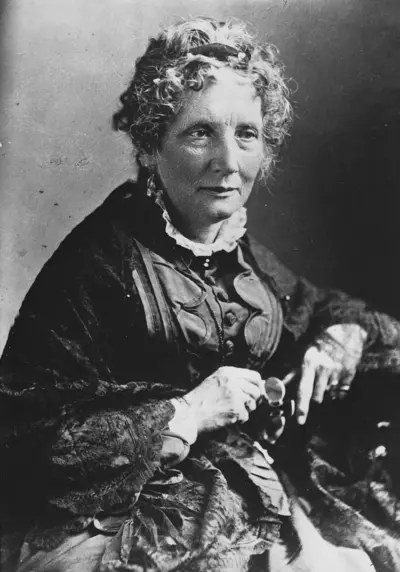
Harriet Elisabeth Beecher Stowe was an American abolitionist and author. She came from the Beecher family, a famous religious family, and is best known for her novel Uncle Tom's Cabin (1852), which depicts the harsh conditions for enslaved African Americans. The book reached millions as a novel and play, and became influential in the United States and Great Britain, energizing anti-slavery forces in the American North, while provoking widespread anger in the South. Stowe wrote 30 books, including novels, three travel memoirs, and collections of articles and letters. She was influential for both her writings and her public stances and debates on social issues of the day.
