William Kirby Quotes
So, anything that avoids a conflict that could draw in, unhappily again, outside powers such as the United States or revisit, for example, Japan's interests in the Taiwan area would be the last thing that anyone would want.
Kirby, William C. "Interview with William Kirby." AsiaSource, Asia Society, 2000.


This appears to be the first American expression of the balance of power doctrine in foreign policy.


Russia announced ballistic missile testing in response to NATO announced deployment of a missile shield across Europe. It was the first mini arms race since the fall of the Soviet Union.

This was the 14th part of the Japanese reply to a previously made American peace proposal. The Japanese policy was to unite all of Asia into a co-prosperity sphere controlled by Japan where Japan would militarily conquer those Asian countries which did not “voluntarily” want to join. The Japanese were in the process of conquering China and the United States and Britain had embargoed oil and other material to Japan trying to pressure them to withdraw their troops from China and cease Japanese conquest by force. Japan believed that it was their right to conquer and control Asia and it was beneficial to the region, and that the U. S. and Britain had no right to curtail the expansion that Japan required to assure raw materials and other necessities. At the very time that these negotiations were on going, the Japanese fleet was sailing for the sneak attack on Pearl Harbor. The attack took place the very day this part of the Japanese reply was received.

At first glance, the reader might think that this quotation in a leading university newspaper was from the Vietnam War era. However, it was argument against U. S. involvement in World War II. There was a very negative reaction to Wilson’s visions and claims for the First World War which never did come to pass that stuck with many.


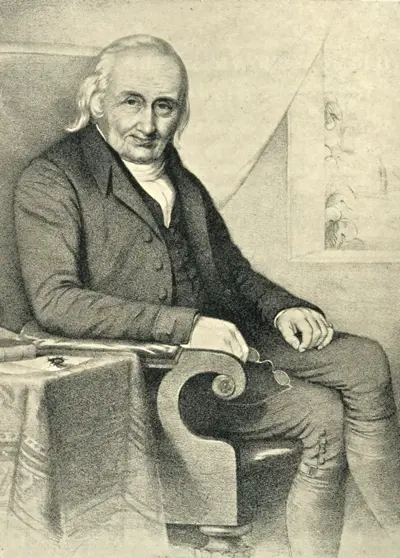
William Kirby was an English entomologist, an original member of the Linnean Society and a Fellow of the Royal Society, as well as a country rector, so that he was an eminent example of the "parson-naturalist". He is considered the "founder of entomology".
