Kim Dae Jung Quotes
If America would withdraw from South Korea, there could be a power struggle between such as China and Japan.
Kim, Dae Jung. Interview with Charlie Rose. Charlie Rose, PBS, 12 Jun. 1998.


At the end of WWII there was much tension between Russia and the Anglo-American alliance. This plan was developed but never implemented. See {613195} for Prime Minister Winston Churchill’s description of the invasion idea.


This was the 14th part of the Japanese reply to a previously made American peace proposal. The Japanese policy was to unite all of Asia into a co-prosperity sphere controlled by Japan where Japan would militarily conquer those Asian countries which did not “voluntarily” want to join. The Japanese were in the process of conquering China and the United States and Britain had embargoed oil and other material to Japan trying to pressure them to withdraw their troops from China and cease Japanese conquest by force. Japan believed that it was their right to conquer and control Asia and it was beneficial to the region, and that the U. S. and Britain had no right to curtail the expansion that Japan required to assure raw materials and other necessities. At the very time that these negotiations were on going, the Japanese fleet was sailing for the sneak attack on Pearl Harbor. The attack took place the very day this part of the Japanese reply was received.


The quotation is notable as it illustrates the great difficulty that modern democracies have with extreme Islamic fundamentalists. Their very perception and world view is so different that often we think of the extremists as insane and they often feel the same way about us.


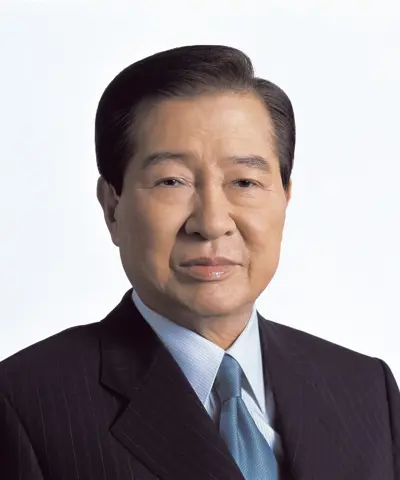
Kim Dae-jung, was a South Korean politician and statesman who served as President of South Korea from 1998 to 2003. He was a 2000 Nobel Peace Prize recipient for his work for democracy and human rights in South Korea and in East Asia in general, and for peace and reconciliation with North Korea and Japan. He is also the only Korean to have won the Nobel Prize to date. He was sometimes referred to as "the Nelson Mandela of Asia". Kim was the first opposition candidate to win the presidency.
