Charles Dickens Quotes
Skewered through and through with office-pens, and bound hand and foot with red tape.
Dickens, Charles. The Personal History of David Copperfield. Bradbury and Evans, 1850, p. 345.


Berg, one of the early OSS recruits, was a brilliant loner and somewhat paranoid. His early modus operandi was to work with no partners, never as part of a team, and only report to the head of the agency and a deputy or two and otherwise never reveal where he was or how he did things. Berg however was brilliant and multilingual, and even was able to have discussions with the best Physicist left in Germany--Nobel Prize winner Werner Heisenberg. Berg determined that Heisenberg was not working on an atomic bomb with some clever technical discussions and listening to some of Heisenberg's presentations. Therefore, following his orders, he did not assassinate the German Scientist whuch he was prepared to do. Other than OSS officials, many in America did not believe that the Germans would not have their best scientist working on Nuclear Energy. However, Hitler was biased against what he called "Jewish Sceince" and bet on jet planes. After the war, The CIA reorganized the American espionage effort and there was no place for Berg’s old school style.


He confuses modernity and religion. Muslims who live in a modern world have the same degree of bureaucracy then the Christians, Jews, Hindus, Buddhists and other religions do. The Muslims of America have the same degree of paperwork as other Americans, and the Turkish bureaucracy has as much filing and other paperwork as countries where the majority of people are of different religions. Historically, when England and France and other Christian countries were in the Dark Ages, Islamic bureaucrats kept Western and Eastern knowledge alive, and when the Ottoman Empire ruled most of the known world, they almost collapsed under their very heavy bureaucracy.


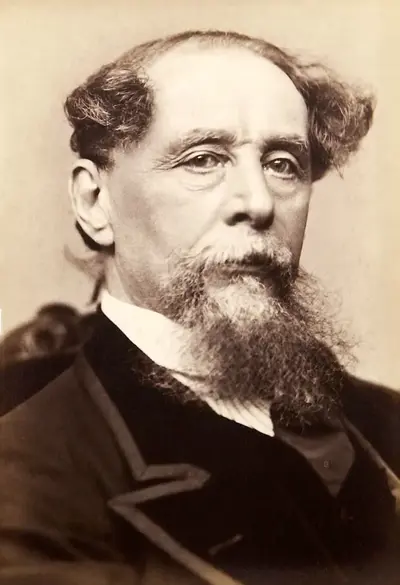
Charles John Huffam Dickens FRSA was an English writer and social critic. He created some of the world's best-known fictional characters and is regarded by many as the greatest novelist of the Victorian era. His works enjoyed unprecedented popularity during his lifetime and, by the 20th century, critics and scholars had recognised him as a literary genius. His novels and short stories are widely read today.
