Coretta Scott King Quotes
Segregation was wrong when it was forced by white people, and I believe it is still wrong when it is requested by black people.
King, Coretta Scott. My Life with Martin Luther King, Jr. Holt, Rinehart and Winston, 1969.


Qutb was studying at Greeley College and with some Egyptian friends want to a movie theater. Greeley, even though not in the South, practiced racial discrimination in many of their public accommodations and the Civil Rights Law would not be passed for another 15 years or so. The ticked clerk at first would not sell tickets to the dark skinned Egyptians and when one protested, the owner was called. He ruled that as long as they were not American Blacks, they could enter. But Qutb refused.

Many fighters for civil rights split from the majority of the Black leadership over racial preferences for affirmative action.

See {618215} for a seemingly contradictory quotation by White.


Historically, until recently there has been a migration from the South to other parts of the country. After legal segregation ended, the out migration slowed and by the end of the 20th century, people—including intellectuals began moving to the South. Generally, the vestiges of the anti intellectualism began to fade, but even into the 21st century the College Board Test Scores and other educational measures were generally lower in the South than in the rest of the country. Ironically, whereas the Southern insistence on segregated schools was to prevent the intellectual erosion that racists thought would come with integration, the educational achievement of the schools and population of the less segregated school areas was considerably better. With legal segregation, there were very few high quality universities in the South and no “World Class” schools. However, along with desegregation has been the intellectual and academic improvement of the Southern Schools and the South began to have, for the first time in America, some educational institutions that were on a par with the rest of the country. The South paid a heavy price for segregation and insularity.

In that year he resigned from the War Department in protest of the discrimination and racism in the armed forces.
This widely publicized statement by Mr. Ethridge was made when he was a member of the President's Committee on Fair Employment Practices during the hearings of this Committee at Birmingham, Alabama.

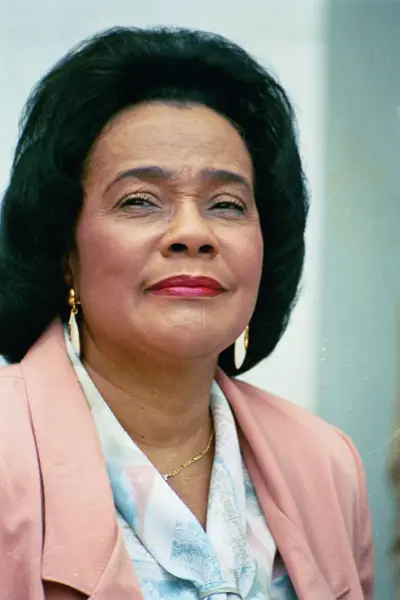
Coretta Scott King was an American author, activist, civil rights leader, and the wife of Martin Luther King Jr. As an advocate for African-American equality, she was a leader for the civil rights movement in the 1960s. King was also a singer who often incorporated music into her civil rights work. King met her husband while attending graduate school in Boston. They both became increasingly active in the American civil rights movement.
