Oliver Wendell Holmes Sr. Quotes
[Science is] piecemeal revelation.
Holmes, Oliver Wendell. The Professor at the Breakfast-Table. Ticknor and Fields, 1860, p. 308.


Science has the interesting characteristic that most failures are successes in the sense that scientific knowledge is gained from the failure even if it only a guide to what not to do in the future. Politics would be well served to adopt this pragmatic approach, but ideology usually prevails in politics and errors tend to be repeated if there are supported by political philosophy or ideology.


We have two opposite dynamics operating today. On the one hand the scientific breakthroughs like Quantum Mechanics and genetic engineering widen the intellectual gap immensely between the average person (and politicians) and the scientist—at a time when society must make enormous decisions on scientific matters. On the other hand, there have never been so many people before educated in the sciences. There are many (not a majority) high school students who today understand Relativity and even well and broadly educated non-science college graduates are often familiar with Relativity, Quantum Mechanics, and other scientific breakthroughs of the 20th century. The world as a whole has never had so many scientifically literate people as today, nor has it ever had so many scientifically illiterate people today.


The English Language has been in use for over 1000 years. English and English Speaking scientists have been active througout that time. Yet at the time that Wulf pointed this out, the actual word "Scientist" had been in use for less than a century.


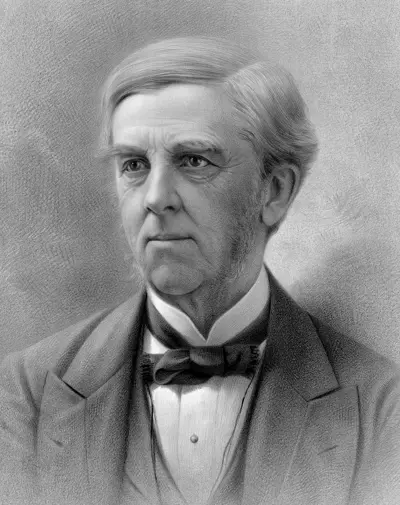
Oliver Wendell Holmes was an American physician, poet, and polymath based in Boston. Grouped among the Fireside Poets, he was acclaimed by his peers as one of the best writers of the day. His most famous prose works are the "Breakfast-Table" series, which began with The Autocrat of the Breakfast-Table (1858). He was also an important medical reformer. In addition to his work as an author and poet, Holmes also served as a physician, professor, lecturer and inventor and, although he never practiced it, he received formal training in law.
