William Beveridge Quotes
No one believes an hypothesis except its originator but everyone believes an experiment except the experimenter. Most people are ready to believe something based on experiment but the experimenter knows the many little things that could have gone wrong in the experiment. For this reason the discoverer of a new fact seldom feels quite so confident of it as others do.
W. I. B. Beveridge, 1908-2006, Australian microbiologist and animal pathologist, The Art of Scientific Investigation, 1950
Sourced by: Eigen's Political and Historical Quotations


The scientist insists on verification; the religious theologian does not; the philosopher sometimes does and sometimes does not.

This quotation illustrates and important aspect of science. Specifically, that theory, something ephemeral and impractical to the layman, has immense practical power in developing great scientific and technological breakthroughs. The result of this breakthrough was large lenses that could make lights more powerful and make lighthouses much more safe. Even the atomic bomb was really developed from theory and then engineered for practical use.

This unfortunately happens in Congress all the time. A good example is {640730}.

Belief and/or ideology of even teh vast majority or the world has no influence on the vaidity and truth of science. A particualr scientific statement is true or not based an many factors, none of which have anything to do with beliefs, world views, custims, cultures, or religious doctrine.


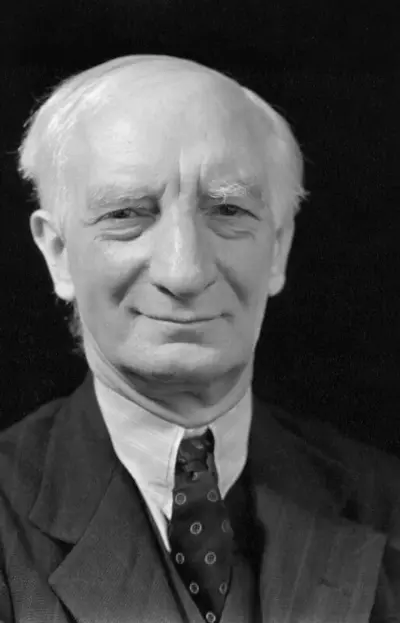
William Henry Beveridge, 1st Baron Beveridge, KCB was a British economist and Liberal politician who was a progressive and social reformer. His 1942 report Social Insurance and Allied Services (known as the Beveridge Report) served as the basis for the post-World War II welfare state put in place by the Labour government elected in 1945. He was considered an authority on unemployment insurance from early in his career, served under Winston Churchill on the Board of Trade as Director of the newly created labour exchanges, and later as Permanent Secretary of the Ministry of Food. He was Director of the London School of Economics and Political Science from 1919 until 1937, when he was elected Master of University College, Oxford.
