William James Quotes
Science as such assuredly has no authority, for she can only say what is, not what is not.
James, William. The Will to Believe, and Other Essays in Popular Philosophy. Longmans, Green, and Co., 1897, p. 22.


3rd Earl Russell of Kingston

Belief and/or ideology of even teh vast majority or the world has no influence on the vaidity and truth of science. A particualr scientific statement is true or not based an many factors, none of which have anything to do with beliefs, world views, custims, cultures, or religious doctrine.


Proof in a scientific and mathematical context is very different from the legal concept of proof. For Feynman, proof consisted of both being able to deduce a statement in much the same way as a proof is offered in plane geometry and being able to construct an experiment which will demonstrate the validity (confirm the prediction of what will happen all cases. As a theoretical physicist, most of his proofs were of the mathematical, deductive kind. There are many phenomena in mathematics and science that were, and are, known long before someone was able to offer a proof.


This is a very material quotation with regard to Congress creating science-related policies and legislation. The members of Congress know the least about scientific matters than almost anything else that they have to legislate about. So typically they rely on scientific experts. Scientists are witnesses at Congressional hearings and often the political, polarized staff arrange to have scientists who disagree in something. They both have PhDs in the field, but one may be a great scientists and the other, a lightweight. This is where Alverez’s point becomes so critical. The Congress and staff have to learn how to differentiate between a “second rater” or a “Fermi” one of the great physicists of all time.

The Latin means “the voice of the people is the voice of God.” See Alcuin if York {593018} for a quick history of the statement. Essentially, in science public opinion is irrelevant or at least should be. One of the major political issues in our society is whether ideology and/or public opinion should control policy and practice of scientific issues, methods, and practices.
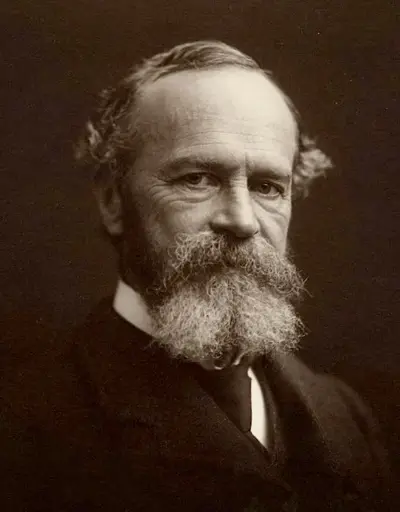
William James was an American philosopher, historian, and psychologist, and the first educator to offer a psychology course in the United States. James is considered to be a leading thinker of the late nineteenth century, one of the most influential philosophers of the United States, and the "Father of American psychology".
