Aristotle Quotes
Rhetoric may be defined as the faculty of observing in any given case the available means of persuasion. This is not a function of any other art.
Aristotle. Rhetoric. Translated by W. Rhys Roberts, Clarendon Press, 1924, 1355b.


Muhammad, a great orator himself, recognized the power of great oratory.


Goldman was one of the great orators of all time. The assassin of the mayor of Chicago testified that although he had never talked with her personally he had attended one of her lectures and “she set my on fire.” She was one of the most sought after speakers in the country. This frightened the authorities.

Samuel Langhorne Clemens, 1835-1910
Samuel Langhorne Clemens, 1835-1910


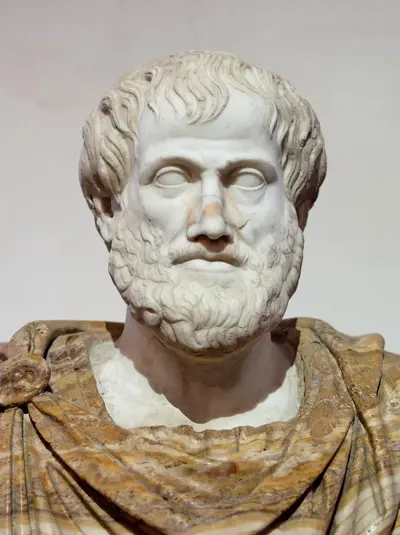
Aristotle (/ærɪˈstɒtəl/; Greek: Ἀριστοτέλης Aristotélēs, pronounced [aristotélɛːs]; 384–322 BC) was a Greek philosopher and polymath during the Classical period in Ancient Greece. Taught by Plato, he was the founder of the Lyceum, the Peripatetic school of philosophy, and the Aristotelian tradition. His writings cover many subjects including physics, biology, zoology, metaphysics, logic, ethics, aesthetics, poetry, theatre, music, rhetoric, psychology, linguistics, economics, politics, meteorology, geology and government. Aristotle provided a complex synthesis of the various philosophies existing prior to him. It was above all from his teachings that the West inherited its intellectual lexicon, as well as problems and methods of inquiry. As a result, his philosophy has exerted a unique influence on almost every form of knowledge in the West and it continues to be a subject of contemporary philosophical discussion.
