Andy Rooney Quotes
Republicans ... are conservatives who think it would be best if we faced the fact that people are no damned good. They think that if we admit that we have selfish, acquisitive natures and then set out to get all we can for ourselves by working hard for it, that things will be better for everyone. They are not insensitive to the poor, but tend to think the poor are impoverished because they won’t work. They think there would be fewer of them to feel sorry for if the government did not encourage the proliferation of the least fit among us with welfare programs.
Andy Rooney, TV columnist and humorist, And More
Sourced by: Eigen's Political and Historical Quotations


It has been true for most of American history with exceptions in depressions and some of the bad recessions. However after the 2008 economic meltdown of the George W. Bush Administration and the Great Recession that followed up to the time of this interview, it had not been true and one of Brooks' political objectives was to make it so again.

Normally, this would not be a particularly noteworthy quotation. However, at the time the Republican Party had shifted far to the right–more so than at any other time since its inception. The primary election he was in brought out the most right wing members of the party, which was for gutting the social safety net, did not see health care as a right, and even wanted to terminate Obamacare and Social Security as it existed. Yet when asked in a nationwide TV interview, what the government should do for the poor and destitute who could not afford health care or other necessities. His courageous answer and position doomed his bid for the presidential nomination.


In 1877 Wasburn was dropped from the List of Ministers by the Unitarian Church. He had become quite atheistic.

Mormons in later years found this principle difficult to enforce where there was unemployment and workers were idle through no fault of their own. The local Mormon churches were very active in encouraging wealthier Mormons to hire those who were unemployed.

RSD Party platform. The Russian Social Democratic Party was in 1887 a very modern democratic party inside the feudalism of Tsarist Russia. The Tsar and the nobility thought them wild radicals and yet their party platform was not only reasonable, but in large part influenced by the American Constitution, Bill of Rights, and then current practices in America. It is hard to believe but at the time a Russian could not work at an occupation he chose but could only do the work that was permitted by the aristocrat who owned the land he lived on. The Tsar, Alexander III, was a terrible autocrat, unlike his father who had desired some reform and abolished serfdom. All efforts at any kind of Democratic reform were put down, and Russian reformers in this party tended to split between those who still hoped for reform and those who saw violent revolution as the only hope. By 1906 the party which had no success at any of their planks of reform had split into two main subgroups—the Mensheviks and the Bolsheviks—both active revolutionary groups, but the Mensheviks tended to be more democratic and moderate and wanted to include the workers and the middle class whereas the Bolsheviks saw the middle class as part of the problem and argued for a more radical political structure. The real split occurred after the 1917 revolution when the Mensheviks lost popularity among the Russian revolutionists as not being radical or realistic enough in what it would take to transform Russia. The Bolsheviks gained control and by 1921, they had outlawed and purged the Menshevik party. That was the last hope of democracy in Russia, as the Bolsheviks model was that which guided the country until the fall of the Soviet Union.


They lost. Sweden had a combination of a high standard of living, a very robust and effective social safety net and a high marginal income tax rate. For Swedes who do not work, life is far better than for employed people in most other countries. For those who work, they pay a large proportion of their earnings as taxes. So the very hard worker is left with comparatively little advantage over non workers. Conservatives have always warned that this is a formula for economic stagnation as few people will work. The reality in Sweden and a few other nations, is that the vast majority of the Swedes choose to work—but they work not to survive, but for reasons which range from interest in their work, the social interaction of the workplace, the desire to create things and make a difference in society. Even in America there are many who work who do not need the money and are motivated by non-monetary factors.

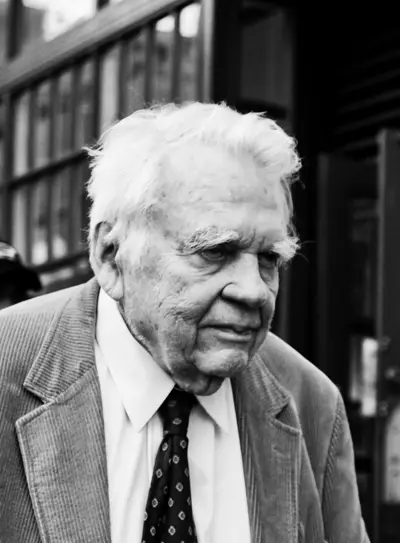
Andrew Aitken Rooney was an American radio and television writer who was best known for his weekly broadcast "A Few Minutes with Andy Rooney", a part of the CBS News program 60 Minutes from 1978 to 2011. His final regular appearance on 60 Minutes aired on October 2, 2011; he died a month later at the age of 92.
