Aristotle Quotes
Readiness to change from old law to new law enfeebles the power of the law.
Aristotle, 384-322 BC, Greek Philosopher & Teacher, Politics, 343 BC
Sourced by: Eigen's Political and Historical Quotations


See {585430} for a classic example of this principle.


This is the earliest surviving attempt of the Romans to formulate a legal code.
In the English system there is no “separation of powers”. Parliament makes the laws and its ministers execute them. The highest judges are members of Parliament (the House of Lords) as well. So Lord Bereford was in the legislature when the statute was debated and passed.

She was charged with interfering with the Draft during WWI. She wrote and gave speeches against the war and was convicted according to the laws and court interpretations of the time.


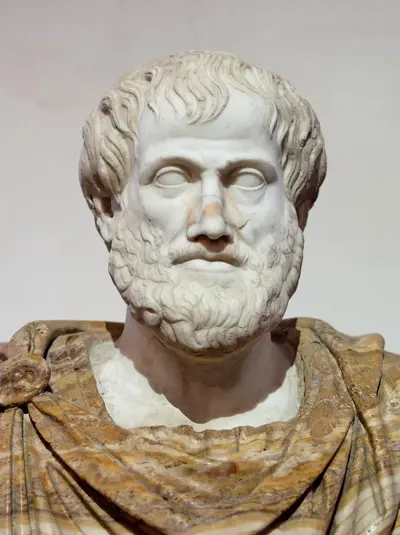
Aristotle (/ærɪˈstɒtəl/; Greek: Ἀριστοτέλης Aristotélēs, pronounced [aristotélɛːs]; 384–322 BC) was a Greek philosopher and polymath during the Classical period in Ancient Greece. Taught by Plato, he was the founder of the Lyceum, the Peripatetic school of philosophy, and the Aristotelian tradition. His writings cover many subjects including physics, biology, zoology, metaphysics, logic, ethics, aesthetics, poetry, theatre, music, rhetoric, psychology, linguistics, economics, politics, meteorology, geology and government. Aristotle provided a complex synthesis of the various philosophies existing prior to him. It was above all from his teachings that the West inherited its intellectual lexicon, as well as problems and methods of inquiry. As a result, his philosophy has exerted a unique influence on almost every form of knowledge in the West and it continues to be a subject of contemporary philosophical discussion.
