Shehbaz Sharif Quotes
Punjab believes that every province has equal rights, and when all provinces will make progress, Pakistan will make progress.
Sharif, Shehbaz. "All Provinces Have Equal Rights." Business Recorder, 2016.


The Punjab had been partitioned into a Pakistani part and an Indian part. The latter was a major province of the new state. But in the political process of drawing the boundaries, Jinnah and other Muslim leaders had used fanatic Muslim terrorists to massacre Sikhs and Hindus to ethnically cleanse areas and intimidate the ruling Indian Congress Party and the British government to obtain more area and resources for the Muslim state. However, at this point he had to govern, and there were still many Sikhs and Hindus as well as Christians and Buddhists in the new Muslim state. Jinnah's new state needed all the help it could get from the U. S. and others, and Jinnah started sounding like a passionate democrat. On paper religious freedom was guaranteed in Pakistan. However Pakistan became one of the most dangerous countries in the world for non-Muslims. Most historians agree that the Muslim terrorism in the short run had worked, as it would have been unlikely that India would have been partitioned in the absence of violence. However, it set in motion a cultural pattern of religious hate, bigotry, intolerance, violence and murder which would plague Pakistan thereafter. The politicians throughout the country's history have tried to use the Muslim religious, fundamentalist, extremists for their purposes only to find that the fanatics were out of control and the entire Pakistani population has lived in fear, lest an extremist decide that what they did or say was inimical to Islam and assassinate him or her. They have assassinated even the highest levels of politicians—President, Governors of Provinces, National Legislatures as well as Journalists, writers and academics. But the average Pakistani citizen has always been at risk of brutal murder with hundreds killed every year in an atmosphere of total impunity for the murderers. They have even murdered married women who had been raped on the grounds that they were adulterers and were therefore stoned.


East Pakistan—now Bengladesh—revolted and declared independence. The military cracked down committing atrocities against the rebels who asked India’s help. India intervened and Pakistan declared war on India and then suffered a humiliating defeat. Pakistan was isolated and distraught when Bhutto tried to rally the nation. What was fascinating, that there was very little damage to the non-military infrastructure of Pakistan. Their military bases and many of their major weapons systems and warplanes were destroyed, but in terms of the economy Pakistan was not in any crisis at all. However, Pakistan was and still is a militarily controlled nation where the president and prime minister, when civilians, have little significant power. The Pakistani people have been brainwashed by successive military leaders to believing that they were a superior military power and many of the religious leaders preached that their Islamic faith had to be protected from the Hindu Indians by strength of arms. The crisis was one of confidence and the only reason there was any economic consequence was that Pakistan would use immense sums of public revenue to not only rearm but also develop a nuclear capacity. This was the crisis—Pakistan would be poor for years because of military spending, See {623844} . The loss of East Pakistan (Bangladesh) actually made Pakistan much richer, The per capita earnings of East Pakistan was much lower, and East Pakistan was the most expensive part of the country to support (not counting military expenditures.) Ironically, with a military government paranoid about India with more control and more money, Muslims living in India had more freedom and were economically better off than the Muslims of Pakistan.


Not only were the Democratic and Republican Parties at odds, but both political parties were split with the different factions very hostile to each other. The Populists and the Progressives were putting great pressure in the Democrats, and the Corporate Republicans strongly and often viscously opposed President Roosevelt. America was politically fractionated. Roosevelt called for a comity and unity which never took place.


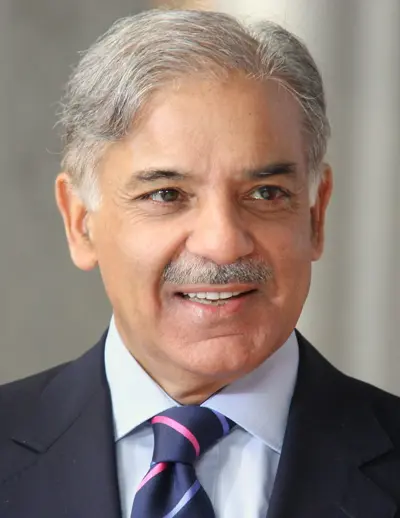
Mian Muhammad Shehbaz Sharif is a Pakistani politician who is the current Leader of the Opposition in the National Assembly of Pakistan, in office since 20 August 2018. He has been a member of the National Assembly since 13 August 2018 and is the current President of the Pakistan Muslim League-N. Previously, he has served as the Chief Minister of Punjab three times in his political career making him the longest serving Chief Minister of Punjab.
