William Rehnquist Quotes
… public figures and public officials may not recover for the tort of intentional infliction of emotional distress by reason of publications such as the one here at issue without showing, in addition, that the publication contains a false statement of fact which was made with 'actual malice,' i.e., with knowledge that the statement was false or with reckless disregard as to whether or not it was true.
First amendment protect speech and publication even if it is slanderous or libelous as long as the subject is a public figure or public official and the falsehoods or errors are not malicious.
William Rehnquist, 1924-2005, Chief Justice, U. S. Supreme Court Hustler Magazine v. Falwell, 1988
Sourced by: Eigen's Political and Historical Quotations

Usually Jefferson was the strongest voice for rights with no loopholes. However, he wanted to have a slander exception as this quote shows. However, the issue is what happens if a government official or an agency believed that it has been falsely slandered? If Jefferson’s proposal was accepted completely, the government and officials could sue someone who published negative information that they thought was false. Our supreme court has limited the exception to private parties who were NOT “public figures” unless the publisher knew the information was false and proceeded anyway for malicious reasons.
England and most other countries do not have such an exception and the press is very timid about criticizing the government or officials lest they make a mistake .
The word “printer” had a slightly different meaning then. In Jefferson’s time the printer was also the publisher, Benjamin Franklin was known as a printer but he not only published material but wrote much of it himself. This was typical. So Jefferson is concerned with the rights of the printer, the publisher and the writer.

A critical difference between English and American law is that truth is an absolute defense in the U. S. but is not in Great Britain. In the case of public figures, "the great," even truth is not required in U. S. law. It is not against American law to slander public figures as long as it is not malicious.

Samuel Langhorne Clemens, 1835-1910. Grant was the victim of more journalistic errors than most politicians as a number of his appointees turned out to abuse their position for their own gain. Often, Democratic leaning newspapers would claim the Grant was aware of the corruption, sharing in it or both, When there was later proof of Grant’s non involvement, most newspapers would never publish a retraction of correction.

This principle was incorporated into American law by the Supreme Court 1964 decision in Sullivan v. New York Times, where this argument drove the opinion.


This distinction is the basis for the Supreme Court Decision in New York Times v Sullivan where they ruled that the libel of a public figure is not to be punished unless it was malicious and not just defamatory. In England, a person can be sued for slandering a politician. Worse, truth is not an absolute defense in a libel suit in England as it is in the United States.


She was commenting on a suggestion that a Twitter User had made that any individual who felt he/she was being harassed by insulting Twitter messages, could have Twitter delete the offending content. Some of the Twitter campaigns against an individual has been gross, indecent, cruel and for the most part untrue. Hence the request. The person who perceived that he/she was being harassed was free to bring a lawsuit against the sender for defamation if the material is untrue and the person is not a Public Figure. The latter have no general right of redress in the courts.


This law, passed by the President John Adams and the Federalists, became the political factor around which Thomas Jefferson, James Madison and others were to create the Democratic Republicans who not only ousted the Federalists but beat them so badly that the party disappeared and the Whig Party evolved. Under this law a person who criticized any facet of the Government publicly could be fined and imprisoned. The Act was unconstitutional but at that early stage of America, there were no Supreme Court precedents to go by and the power of the courts to nullify a law of Congress was not even clear. So it was never tested in the courts but finally was repealed.


The libel and slander laws in England were then, and are today, dramatically different from those of the United States in two fundamental ways: In America truth is an absolute defense; in England you can’t say true things about people which are personally libelous. Second, in America politicians and public figures are not entitled to a verdict even if the statements are inadvertently or possibly false. Without the Constitutional protections of freedom of speech and freedom of the press, the reputations of people including public figures are given much more weight in England than in America.

The evils of the time were even worse than in modern times. Most newspapers, journals, and periodicals were in 1835 actually owned and operated by political parties or people totally identified with political parties. In modern times, there are publications and blogs which are controlled by political forces, but most are not.

Islamic modernists like Serageldin are many among the educated Muslims but their views are often drowned out by the violence and extremist statements of the fundamentalists. Even in England it is difficult to expose corruption because of the libel laws. In most countries, it is almost impossible which is one of the reasons corruption is so widespread. American law says that it is better to mistakenly hurt some public figures’ reputation than suppress the ability of citizens to criticize and expose corruption.

This is generally true in politics.


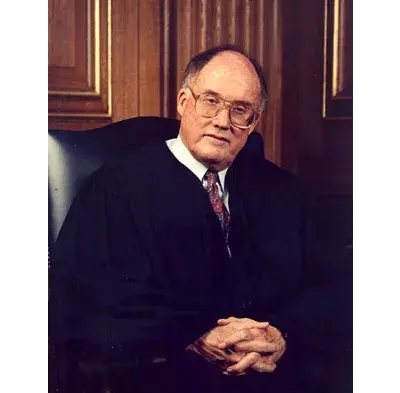
William Hubbs Rehnquist was an American lawyer and jurist who served on the Supreme Court of the United States for 33 years, as an associate justice from 1972 to 1986 and as Chief Justice from 1986 until his death in 2005. Considered a conservative, Rehnquist favored a conception of federalism that emphasized the Tenth Amendment's reservation of powers to the states. Under this view of federalism, the court, for the first time since the 1930s, struck down an act of Congress as exceeding its power under the Commerce Clause.
